









Key Takeaways
* Website builders work for businesses that need a simple online presence fast. Custom websites work for businesses that need something the templates cannot do.
* The cost difference is real but narrower than most people think once you factor in plugins, premium themes, and ongoing maintenance.
* The decision should be driven by what your business needs in 18 months, not what it needs this week.
* Companies that start with a builder and migrate to custom later often spend more total than if they had gone custom from the start.
* If your website is your product (SaaS, marketplace, platform), a builder is almost never the right choice.
The real question behind the question
Every business owner asks this question at some point: Should I use Wix, Squarespace, or WordPress, or should I hire someone to build a custom site? The question sounds like it is about technology. It is really about what your website needs to do for your business.
A restaurant that needs a menu, hours, and a reservation link is solving a different problem than a logistics company that needs a client portal with real-time tracking. Both need websites. They do not need the same website. The builder-vs-custom decision flows from that distinction.
When a website builder is the right choice
Website builders have gotten genuinely good over the past few years. For certain use cases, they are the clear winner.
* Your site is informational. Menu, hours, contact form, about page, maybe a blog. Builders handle this perfectly, and you can be living in a weekend.
* Your budget is under $5,000. At this price point, custom development cannot deliver a polished result. A builder with a premium template and a few paid plugins will look better than a cheap custom build.
* You want to manage content yourself without calling a developer. Builders have drag-and-drop editors that let non-technical founders update copy, swap images, and publish blog posts without touching code.
* Speed matters more than differentiation. If you need a site live in two weeks for a product launch or a funding round, a builder is the only path that hits that timeline.
When custom development makes more sense
Custom development earns its premium when the business requirements go beyond what templates can handle.
* Your website is your product. SaaS platforms, marketplaces, booking engines, and client portals. These need custom architecture, not a page builder with plugins bolted on.
* You need integrations that builders cannot support. Custom CRM connections, ERP syncs, third-party API workflows, real-time data dashboards. Builders hit a wall with complex integrations.
* Performance and SEO are competitive advantages. Custom-built sites can be optimized at the code level for page speed, Core Web Vitals, and crawlability in ways that builder templates cannot match.
* You are in a regulated industry. Healthcare, finance, and legal businesses often need custom security, compliance features, and audit trails that no builder template provides out of the box.
* You plan to scale. If your site will need to handle 50,000 monthly visitors, process payments, and serve dynamic content, starting custom saves you the cost of rebuilding later.
The cost comparison most people get wrong
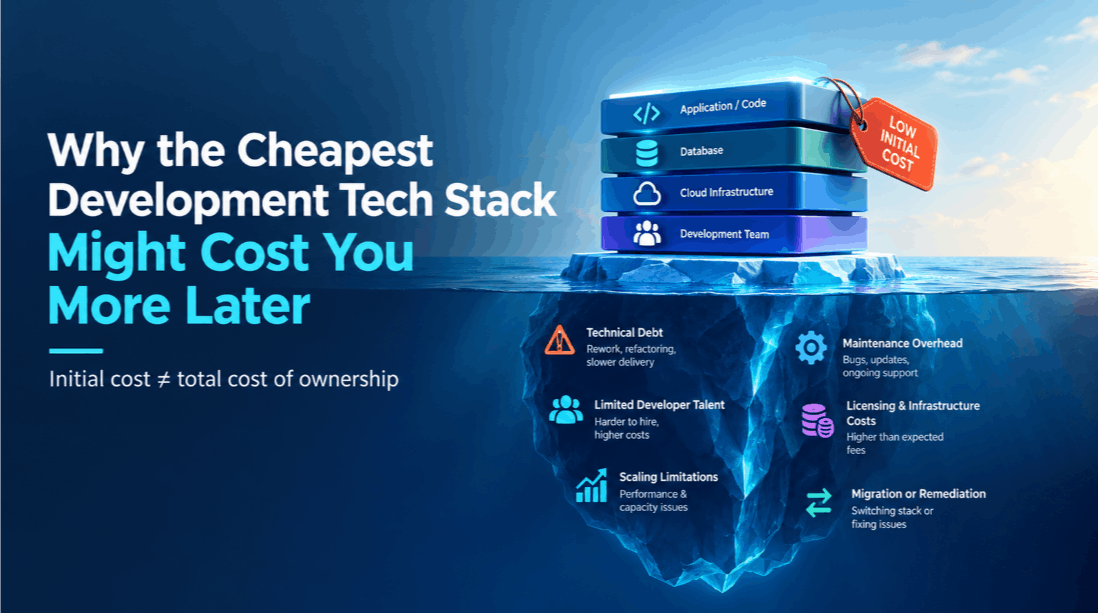
The headline comparison is misleading. "Builders cost $20 per month; custom costs $10,000 and up." That is true in the same way that "a studio apartment costs $800 per month and a house costs $300,000." They are different products for different needs. A more honest comparison looks at total cost over three years, which is where the gap narrows. Understanding the average website design cost for small business projects across both approaches helps business owners avoid the common mistake of comparing sticker prices without accounting for plugins, premium themes, developer hours for customization, and ongoing maintenance.
A builder site with a premium theme ($100), five paid plugins ($300 per year), and occasional developer help for custom tweaks ($1,000 per year) costs roughly $4,500 over three years. A basic custom site at $8,000 to $12,000 with $1,500 per year in maintenance costs $12,500 to $16,500 over the same period. The gap is real, but it is 3x, not 50x.
The hidden cost most people miss is the rebuild. Businesses that start with a builder and outgrow it within 18 months end up paying for the builder phase plus the custom rebuild. That total is often higher than going custom from the start.
The mobile app question
Some businesses reach a point where a website alone is not enough. When customers need native mobile functionality like push notifications, offline access, camera integration, or location services, the conversation shifts from website to app.
If your roadmap includes a mobile app alongside your website, the vendor you choose matters. Reviewing curated lists of the best iOS app development companies early in the process helps you find partners who can handle both web and mobile under one contract, which simplifies project management and keeps design consistency across platforms.
How to make the decision
Three questions will get you to the right answer faster than any feature comparison.
* Is your website your product, or is it a brochure for your product? If it is a brochure, start with a builder. If it is the product, go custom.
* Will your requirements change significantly in the next 18 months? If yes, custom gives you flexibility that builders cannot match. If not, a builder is fine.
* Is your budget above $8,000 for the initial build? Below that threshold, custom development cannot deliver a quality result. Above it, you have a real choice.
The honest answer for most small businesses is to start with a builder and plan the migration to custom when (and if) the business outgrows it. The honest answer for most businesses with complex requirements, regulated industries, or product-driven websites is to go custom from day one and avoid the rebuild tax.
Wrapping up
The builder-vs-custom question is not a technology decision. It is a business decision. Builders are faster, cheaper, and good enough for simple use cases. Custom development is slower, more expensive, and necessary when your business requirements go beyond what templates can handle.
Pick the one that matches where your business will be in 18 months, not where it is today. That single shift in framing saves more money than any coupon code or vendor discount ever will.


Post Comments