






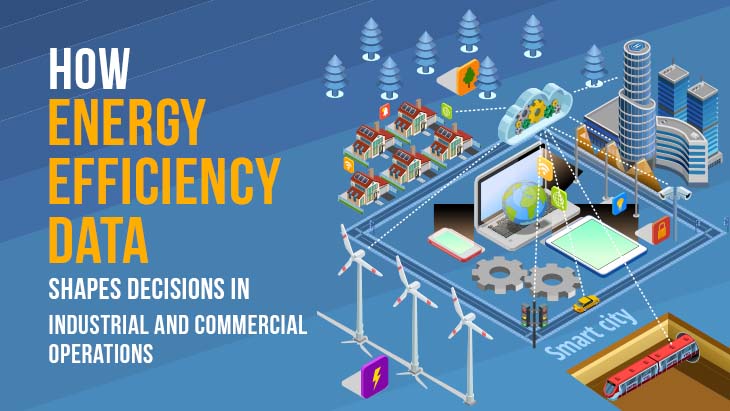

The data on energy efficiency has taken a center stage in the planning, operation and investment by industrial and commercial organisations. With the continued increase in the cost of energy and the requirement to be sustainable, the decision makers utilize the accurate data to determine how the facilities use their power and the areas where they can be improved. This is a factual method that substitutes estimated assumptions with objective data to enable the leaders to strike a balance between the operational performance, cost management and the environmental responsibility. When data on energy efficiency is interpreted efficiently, organizations can make wise decisions which will assist in achieving the short-term efficiency objectives and strategic goals in the long-term.
Data Collection
The decision to focus on energy efficiency starts with the overall collection of data on equipment, buildings, and processes. The sensor, smart meter and building management system offers you real time data on the consumption of electricity, gas and thermal. This data can be used in industrial and commercial contexts to show trends that would not be apparent solely using utility bills like peak hours of heating or cooling, idleness of energy, or inefficiency of a particular machine. All further analysis will be based on reliable data and make a decision based on real performance, not estimates.
Data Accuracy
The data of energy efficiency is of great importance to making a decision and its quality and accuracy. Poor data can cause incorrect investments or lack of opportunity to exploit. Instead, organizations are keen on data validation, normalization and benchmarking so that data comparison across sites or systems has a meaning. Good data allows the facility managers to tell the difference between the normal range of operations and actual inefficiency that will allow them to allocate where they will have maximum effect.
Operational Planning
The information on energy efficiency is directly involved in the development of day-to-day and long-term operational planning. With the knowledge of the variation in energy consumption with production schedules, occupancy rates, or weather, managers can manage operations to minimize wastage without incurring losses in output. The information can be used to make decisions like the rescheduling of some activities that consume a lot of energy, run time optimization of equipment, or improvement of controls. Such changes tend to result in direct cost reduction as well as increasing the overall reliability of the system.
Facility Design
Energy efficiency data is used in key design decisions in both new construction and retrofit projects. The past performance information assists the organizations to assess the building materials and systems that provide the best performance under the actual working conditions. To illustrate the point, the information on heat loss and thermal performance can be used to inform the choice of insulated metal panels or insulated roof panels to enhance building envelopes. Evidence-based design choices will minimize uncertainty and make sure the long-term capital investments are based on efficiency goals.
Financial Strategy
The financial decision making is also influenced by the energy efficiency information as it helps in explaining the payback of efficiency programs. Companies can better model the cost reduction, payback and risk with detailed energy metrics. This financial transparency allows provision of budget approvals and assists in justifying investments to the stakeholders. Efficiency improvements can be regarded as strategic assets, and not optional costs, when the improvements are correlated with the measurable results.
Strategic Direction
On a strategic level, the data on energy efficiency affects a wider organizational direction and policy. Aggregated data enable executives to establish performance objectives, monitor the progress of achievement of sustainability goals and address regulatory needs. The transparency of reporting helps to generate trust in the investors, partners and customers, and data-driven approaches will help the organizations to adjust to the changes in the energy market in the future. That way, the data on energy efficiency becomes not merely a tool of operation, but a roadmap in the resilient and wise decision making in both industrial and commercial practice.