









Most teams don’t think much about support until something breaks in production.
A memory leak takes down a service at 2 a.m. A dependency update introduces a regression. A queue backs up and latency spikes across regions. At that point, “support” stops being a line item and turns into a real operational dependency.
If you’re evaluating vendors, the question isn’t whether they offer support. Everyone does. The question is how their Node.js support team actually works when things go wrong—and what they do when nothing is on fire.
Support isn’t a help desk. It’s production engineering.
A lot of providers still treat support as ticket handling. You file an issue, someone responds, and eventually it gets fixed.
That model doesn’t hold up for Node.js systems under load.
Real support looks closer to production engineering. It includes monitoring, debugging, controlled releases, and ongoing Node.js code maintenance. It also assumes ownership. Not partial involvement. Not escalation chains that lose context. Ownership.
If a vendor can’t explain how they debug a live issue in a distributed Node.js system, they’re not offering support. They’re offering assistance.
Incident response: what happens after the alert fires
Fast response times look good on paper. They don’t fix outages.
Ask how the vendor handles Node.js incident response in practice. Not in theory. You’re looking for specifics: how they trace a failing request across services, how they deal with unhandled promise rejections, how they confirm a fix without introducing new risk.
For example, teams working with tools like Datadog or New Relic should be able to correlate logs, traces, and metrics in one place. If they rely on raw logs and manual grep, resolution will be slow—no matter what their SLA says.
There’s also a tradeoff most vendors won’t say out loud: speed vs. accuracy. Quick fixes can restore service, but they often leave the root cause unresolved. Strong teams fix the issue and document why it happened. That takes longer. It’s worth it.
SLAs: what’s written vs. what’s enforced
A Node.js SLA is easy to misunderstand because it usually emphasizes response time.
“15-minute response” sounds solid. It often means someone acknowledged the issue in Slack. Not that they started working on it.
You want to know:
- Who is actually assigned to the incident
- How long it typically takes to resolve critical issues
- What happens when the SLA is missed
Vendors rarely commit to resolution times because they can’t control complexity. That’s fair. But if they avoid sharing historical data—average resolution time, incident frequency—that’s a signal.
Another limitation: 24/7 coverage is often “on-call,” not fully staffed. There’s a difference between a dedicated night shift and one engineer covering multiple clients.
Code maintenance: the work nobody prioritizes (until it hurts)
Most production issues aren’t sudden. They build up.
Outdated dependencies. Deprecated APIs. Quick fixes layered over older quick fixes. Eventually, something breaks—and it’s harder to fix because the codebase is fragile.
Node.js code maintenance is where good vendors separate themselves. Not by doing more work, but by doing it consistently.
This includes upgrading packages before they become a problem, not after. It includes refactoring legacy patterns—moving away from callback-heavy code, simplifying async flows, and improving test coverage.
There’s a cost here. Maintenance work doesn’t produce visible features. Some vendors quietly deprioritize it to keep clients happy in the short term. That tradeoff shows up later as instability.
Dependencies and security: where most risk actually lives
Node.js applications depend heavily on third-party packages. That’s a strength—and a risk.
Vulnerabilities in widely used packages show up regularly. The event-stream incident is still a good reminder of how deep supply chain issues can go.
Handling Node.js security patches isn’t just about running npm audit fix. Blind updates can break production. Ignoring them leaves you exposed.
Mature teams use staged rollouts. They test updates in controlled environments, deploy gradually, and monitor behavior under real traffic.
Ask the vendor how they handled their last high-severity vulnerability. If the answer is vague, assume the process is too.
Third-party support: integration is harder than it looks
Hiring a vendor for third-party Node.js support sounds straightforward. In practice, it introduces friction.
External engineers don’t have the same context as your internal team. They don’t know why certain decisions were made. They don’t see product priorities.
Good vendors close that gap quickly. They invest time in onboarding—architecture reviews, code walkthroughs, and access to monitoring tools. They assign consistent engineers, not whoever is available.
Bad ones rely on documentation and ticket history. That slows everything down, especially during incidents.
There’s also a control tradeoff. The more responsibility you hand over, the more you depend on their processes. If those processes are weak, you inherit the risk.
Observability: if they can’t see it, they can’t fix it
You can’t support what you can’t observe.
At a minimum, a vendor should be working with:
- Centralized logging (ELK stack, for example)
- Metrics and dashboards (Prometheus, Grafana)
- Distributed tracing
But tools alone don’t matter. How they use them does.
Ask to see a real dashboard. Not a template. A live example showing how they track latency, error rates, and resource usage.
If observability is treated as setup work rather than an ongoing discipline, issues will be detected late or missed entirely.
Performance work: not guesswork
Node.js performance issues are often subtle. Event loop blocking, inefficient queries, and memory leaks don’t always show up immediately.
A capable vendor doesn’t guess. They profile.
They use tools like Clinic.js or built-in Node.js profiling to analyze CPU and memory behavior under load. They reproduce issues in staging when possible. They measure improvements after changes.
If performance optimization is described as “we’ll look into it,” it’s not a core competency.
Deployments: where support either reduces risk or adds to it
Every deployment carries risk. Support teams are part of that equation.
Strong vendors integrate with CI/CD pipelines and use controlled release strategies—canary deployments, blue-green setups, automated rollbacks.
Weak ones treat deployment as a handoff. If something breaks, they respond after the fact.
The difference shows up in how often you see production incidents tied to releases.
How to tell if a vendor actually knows Node.js
You don’t need to run a full technical audit. A short conversation is enough.
Ask how they would debug:
- A memory leak that appears after several hours of uptime
- Increasing event loop lag under moderate load
- Intermittent failures in async workflows
Experienced engineers will give structured answers. Not perfect ones, but grounded in real debugging steps.
If the answers stay high-level, you’re talking to someone who doesn’t work directly with the runtime.
Cost isn’t the main variable — but it still matters
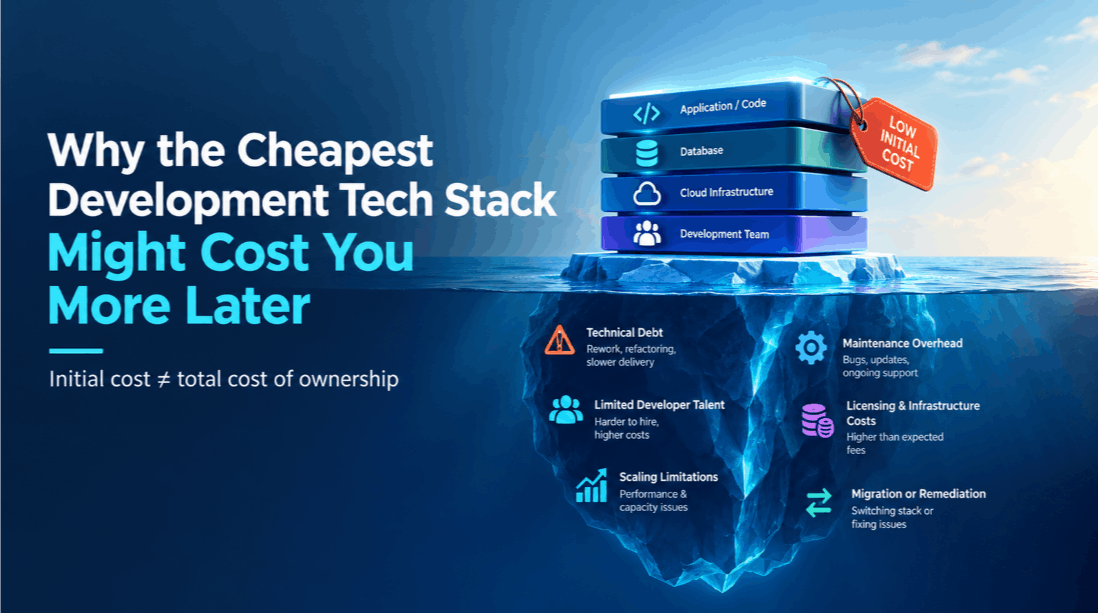
Low-cost support often looks attractive until you factor in downtime, slow resolution, and internal overhead.
You’ll spend more time managing the vendor. Your team will step in to fix issues anyway. Technical debt will accumulate.
Higher-cost vendors aren’t automatically better. But the ones that invest in process, tooling, and experienced engineers tend to prevent problems instead of reacting to them.
That’s where the real savings are.
What to confirm before signing
You don’t need a checklist. You need clarity.
Make sure you understand how incidents are handled, how maintenance is scheduled, how updates are tested, and how communication works during critical issues.
Ask for real examples. Not promises.
Because once your system is in production, support isn’t theoretical anymore. It’s operational reality—and it either holds up under pressure or it doesn’t.



Post Comments