







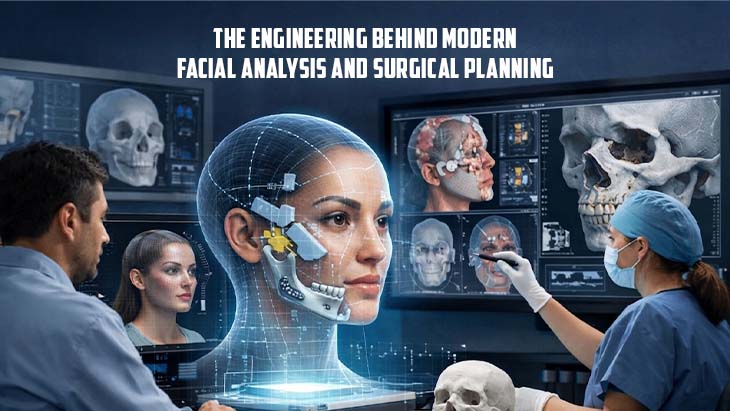

Modern facial analysis and surgical planning are increasingly shaped by technical software, digital systems, and data-driven tools. In simple terms, these systems help surgeons collect facial data, study structural patterns, and build a more accurate treatment plan before a procedure begins.
Instead of relying only on photos and visual judgment, modern planning often uses integrated digital tools such as 3D imaging platforms, mapping software, AI-assisted analysis, simulation systems, and custom planning workflows. This makes the process more precise, more consistent, and easier to scale across complex cases.
What Modern Facial Analysis Means
Facial analysis is the process of examining the face in a structured way before treatment or surgery. From an engineering perspective, it works like a diagnostic system that gathers visual and anatomical inputs, then turns them into usable planning data.
This process often looks at:
- Facial shape
- Symmetry
- Skin quality
- Volume loss
- Bone support
- Tissue position
- Proportion between facial features
Modern facial analysis is more advanced because it treats the face as a three-dimensional data model rather than just a flat image. That allows digital systems to process depth, contour, and spatial relationships more effectively.
What Surgical Planning Means
Surgical planning is the process of turning facial analysis into an actionable procedure plan. In a more technical sense, it is the stage where software tools, measurements, and visual models are used to guide procedural decisions.
This planning helps determine:
- Where changes are needed
- How much correction is appropriate
- Which methods may work best
- How one facial area affects another
- What result is likely to look the most balanced
In simple terms, surgical planning transforms raw diagnostic information into a structured implementation plan.
Why Modern Facial Planning Matters
Modern planning matters because the face is made of connected structures, and changes in one area can affect the rest. From a systems perspective, facial planning is not about isolated edits. It is about understanding dependencies across the full facial framework.
Better planning can support:
- More accurate assessment
- More personalized treatment design
- Better coordination across multiple procedures
- More realistic modeling of outcomes
- More consistent surgical execution
This is where digital systems bring value. They improve precision, reduce guesswork, and create a more repeatable planning process.
How Facial Analysis Supports Facial Feminization Surgery
Facial analysis also plays an important role in facial feminization surgery, often called FFS. Because FFS may involve several facial regions, it depends heavily on coordinated digital planning rather than one isolated adjustment.
From a technical planning perspective, analysis helps teams review:
- Forehead shape and brow position
- Nose size and projection
- Cheek volume and contour
- Jaw width and angle
- Chin size and shape
- Overall facial balance
Modern systems such as 3D imaging and digital mapping are useful here because they help organize multiple facial inputs into one planning framework. This supports better sequencing, better coordination between procedures, and more precise alignment with treatment goals.
From Standard Photos to 3D Facial Imaging
Traditional photos are still useful, but they have limits. They capture surface appearance from fixed angles, but they do not fully represent depth, contour, or volume.
3D facial imaging improves this by creating a more complete digital model. It can help show:
- Facial projection
- Surface contour
- Volume differences
- Structural asymmetry
- Relationships between features
From an implementation standpoint, 3D imaging acts as a core input layer for planning software. It provides structured data that can be reviewed, measured, and used across simulation and procedure design.
Understanding Facial Symmetry and Proportion
Symmetry means how evenly facial features match from one side to the other. Proportion means how well the parts of the face fit together in size and balance.
In modern systems, these are not judged only by sight. They are often supported by software-based measurement tools that can compare landmarks, distances, angles, and volume distribution.
Digital analysis may help evaluate:
- Width and height balance
- Chin projection
- Cheek volume
- Jawline definition
- Eye and brow alignment
- Overall facial proportions
This gives surgeons a more structured way to review facial balance before making decisions.
How AI Supports Facial Analysis
Artificial intelligence, or AI, is becoming part of facial analysis because it can process image data more efficiently and identify patterns that may be harder to spot manually.
AI may help with:
- Identifying subtle asymmetries
- Tracking changes over time
- Organizing facial measurements
- Supporting treatment planning
- Creating visual simulations
AI does not replace medical judgment. Its value is in software support. It helps improve data processing, pattern detection, and planning efficiency within the larger digital workflow.
What Surgical Simulation Does
Surgical simulation is a digital preview system that models possible changes before surgery. It gives surgeons and patients a clearer way to review treatment options using visual outputs rather than verbal description alone.
This can help:
- Make consultations clearer
- Support treatment decisions
- Show possible outcomes visually
- Improve communication between patient and surgeon
From a systems perspective, simulation functions like a testing layer in the planning workflow. It helps teams review possible changes before moving to implementation.
Why Structural Planning Is Important
Older approaches often focused mostly on surface-level correction, such as tightening skin or filling lines. Modern planning is more structural and more data-based.
Today, surgeons also consider:
- Bone support
- Ligaments
- Fat compartments
- Muscle movement
- Tissue descent
- Skin quality
This matters because facial change happens across multiple layers. Digital planning tools make it easier to model those layers and create a more complete treatment strategy.
How the Face Changes Over Time
The face changes over time for many reasons. Aging affects more than just the skin, and modern systems are useful because they help organize these changes into a clearer planning model.
Common changes include:
- Bone loss in certain areas
- Volume loss in the cheeks or temples
- Tissue descent
- Reduced skin elasticity
- Changes in muscle tone
- More visible folds or hollows
Understanding these changes supports better analysis, better data mapping, and better long-term planning.
Combining Surgical and Non-Surgical Technologies
Modern facial planning often includes both surgical and non-surgical technologies because different tools solve different types of problems.
For example:
- Surgery may improve tissue position
- Fat grafting may restore volume
- Laser systems may improve skin texture
- Energy-based devices may support skin tightening
- Injectables may help with contour refinement
From a technical point of view, this is a multi-tool treatment system. Each method serves a different role, and digital planning helps align them into one coordinated approach.
Skills and Tools Used in Modern Facial Planning
Modern facial analysis and planning depend on both clinical skill and technical systems.
Common tools include:
- Standard photography
- 3D facial imaging
- Digital mapping software
- AI-assisted image review
- Surgical simulation platforms
- 3D-printed models or guides
Important skills involved include:
- Understanding facial anatomy
- Reading symmetry and proportion
- Interpreting digital imaging outputs
- Planning structural changes
- Communicating realistic expectations
- Coordinating multiple technologies
Key Duties in the Planning Process
The planning process involves a set of structured tasks before surgery or treatment begins.
These duties often include:
- Reviewing facial anatomy
- Identifying structural concerns
- Measuring proportion and balance
- Examining skin, fat, and bone support
- Comparing treatment options
- Building a personalized plan
- Explaining likely outcomes and limits
This process is similar to a technical workflow. Data is collected, reviewed, modeled, and translated into a clear implementation strategy.
What General Readers Should Take Away
Modern facial analysis and surgical planning are no longer based only on observation. They increasingly depend on software, imaging systems, AI support, simulation tools, and structured planning methods.
In simple terms, these technologies help with:
- Better data collection
- Better analysis
- Better planning
- Better coordination
- Better precision
As digital systems continue to improve, facial procedures are becoming more structured, more technology-driven, and more engineering-focused. That shift is helping make planning more accurate, more personalized, and more consistent.





Post Comments