







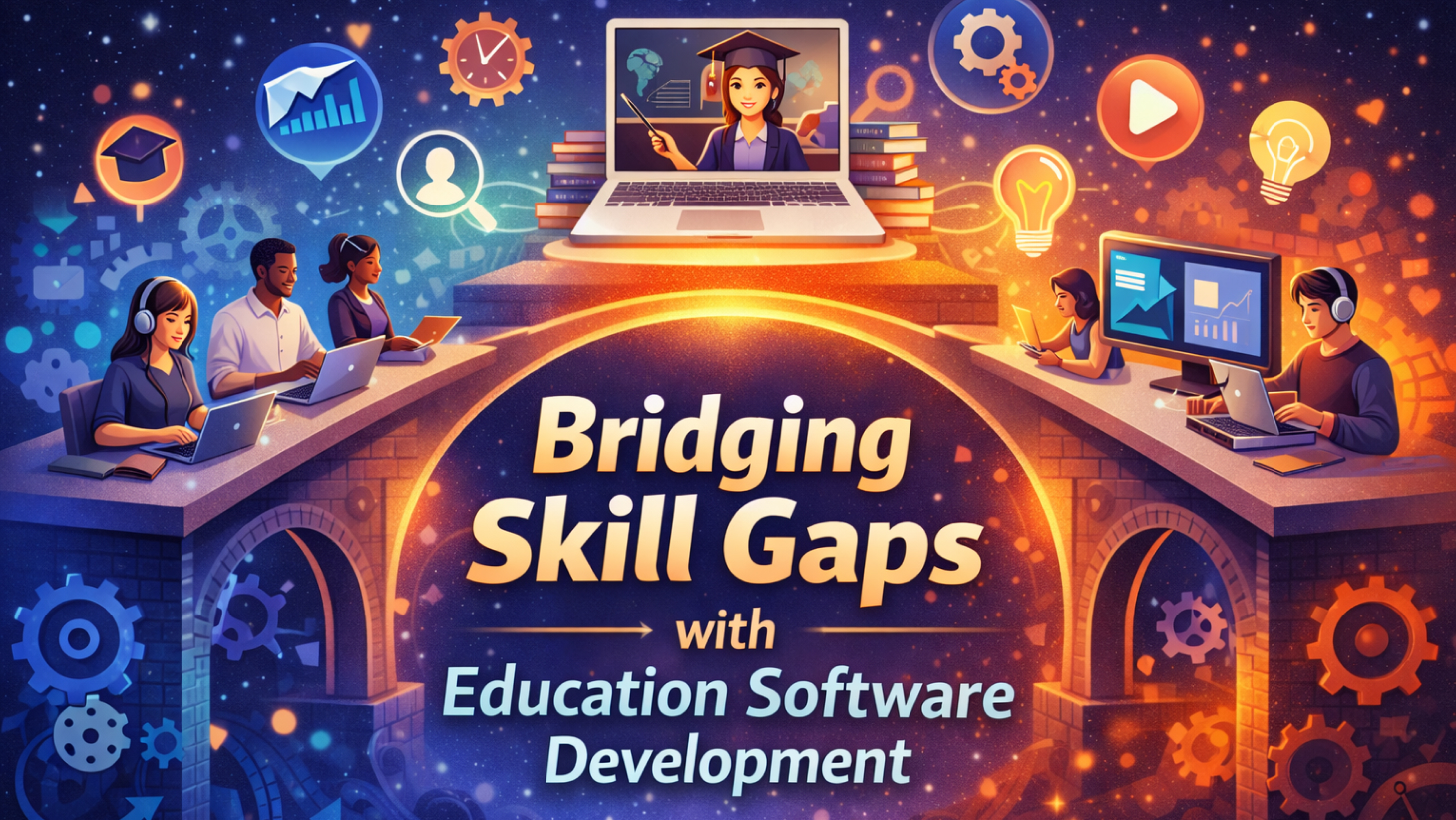

Talk to any hiring manager today and you’ll hear the same concern repeated in different ways: “Candidates are smart, but they’re not ready.”
This isn’t a criticism of learners. It’s a reflection of how quickly industries are moving.
New tools appear. Old processes disappear. Roles change quietly and then all at once. Somewhere in the middle of that shift, skill gaps form—and they affect everyone.
Education software has emerged not as a trend, but as a practical response to this problem.
Where Traditional Learning Falls Short
Classroom-based learning still has value, but it struggles with speed. By the time a course is designed, approved, and delivered, the skills it teaches may already be outdated.
What learners need today is not more information. They need timely, usable knowledge that connects directly to what they do at work.
Education software by a professional mobile app development company in USA is built for exactly that.
Learning That Responds, Not Repeats
The strongest education platforms don’t assume all learners are starting from the same place. Some users are switching careers. Others are updating a single skill. Many just want to keep up without falling behind.
Modern learning systems adapt to the individual. Progress changes the content. Results shape the next lesson. Learning stops being linear and starts becoming responsive.
That shift alone closes a significant portion of the skill gap.
The Importance of Small, Consistent Learning
One overlooked reason people fail to upskill is not motivation—it’s fatigue. Long lessons and heavy coursework don’t fit into real schedules.
Education software solves this by breaking learning into smaller, focused segments. Ten minutes. One concept. One practical takeaway.
Over time, these small efforts compound into real expertise.
Practical Skills Over Passive Knowledge
Reading about a skill and using it are very different experiences. That’s why effective education software leans heavily on interaction.
Simulations, guided exercises, real scenarios—these elements help learners think through problems the way they would on the job. The goal isn’t to finish a course. It’s to feel capable when the situation appears in real life.
Why Mobile Access Matters More Than Ever
Learning no longer happens at a desk. It happens between meetings, during travel, or in quiet moments at home.
Mobile-friendly education software by mobile app development Dallas meets learners where they already are. It removes friction and makes learning feel less like a commitment and more like a natural extension of daily life.
When learning fits into life, people stick with it.
Education Software Inside Organizations
For companies, skill gaps aren’t theoretical—they’re operational. Missed deadlines, inefficient processes, and stalled growth often trace back to outdated knowledge.
Custom education platforms allow organizations to train teams in a way that reflects their actual workflows. Instead of generic material, employees learn what matters to their role, their tools, and their goals.
That alignment makes training worth the investment.
Technology That Observes and Adjusts
Behind the scenes, modern education software quietly learns from users. It notices where people hesitate, where they rush, and where they struggle.
This insight allows platforms to refine learning paths without overwhelming the learner. The experience feels supportive, not corrective—and that difference matters.
Building Software That People Actually Use
Even the best learning content fails if the platform feels frustrating. The most successful education software is simple, intuitive, and respectful of the user’s time.
Clear navigation. Honest progress tracking. No unnecessary complexity.
When learners trust the platform, they return to it.
Looking Forward
Skill gaps will continue to exist as long as industries continue to evolve—and they will. The solution isn’t to slow change, but to make learning agile enough to keep pace.
Education software development is shaping a future where learning is continuous, practical, and deeply connected to real-world needs.
Final Thought
Bridging skill gaps isn’t about doing more. It’s about doing what works.
Education software gives learners control, relevance, and momentum—three things traditional models often struggle to provide.
When learning keeps up with life, progress stops feeling like a race and starts feeling achievable.

Post Comments