







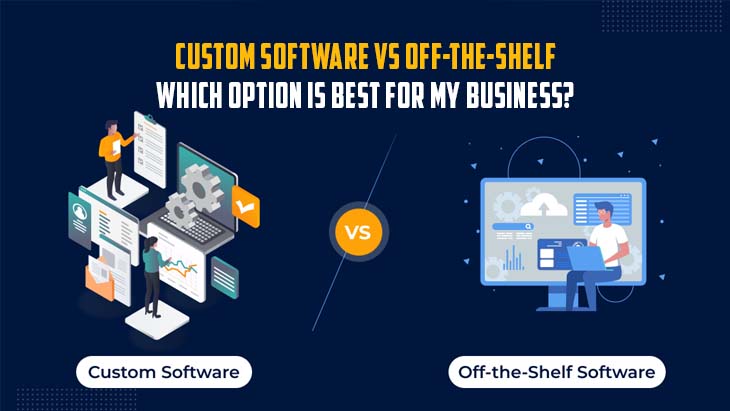

Most businesses don’t wake up one morning deciding to “build software.” They arrive there slowly - after struggling with spreadsheets that no longer scale, tools that almost fit, and workflows bent to suit someone else’s product design. The real question isn’t whether software is needed. It’s whether custom software development or an off-the-shelf solution will actually support the way your business works today and where it’s heading next.
Having had exposure to numerous businesses across operations, retail, logistics, and professional services, I can safely say that both options might follow in time, depending on the context at hand. There is no absolute sure way of deciding on a winning side, for the decision contains many trade-offs, risk tolerance, and long-term intent.
Understanding the Two Paths
Before we compare the two, it will be important to understand what we are talking about.
What Off-the-Shelf Does Well
The off-the-self tools are built to address collective challenges- that goes out there. Accounting, CRMs, project management tools, HR systems, etc. fall within this category.
They work best when:
- Your processes align closely with industry norms
- Speed of implementation matters more than flexibility
- You want predictable costs and minimal setup
For early-stage business or team setups where workflow is standard, these tools often make much sense. You get immediate functionality, ongoing updates, the support ecosystem, without creating anything from scratch.
What Custom Software Actually Means
Custom software isn’t about reinventing basic features. It’s about designing systems around your business logic instead of forcing your business to adapt to a tool.
In the context of custom software development Sydney, this often comes up with companies that:
- Operate across multiple systems that don’t talk to each other
- Have compliance, reporting, or integration needs that generic tools can’t handle
- See technology as a long-term operational asset, not just a utility
Custom solutions are built deliberately, sometimes incrementally to support specific workflows, data models, and growth plans.
Where Off-the-Shelf Starts to Break Down
Off-the-shelf software rarely fails on day one. Problems usually appear six to eighteen months in.
Process Compromise Becomes the Norm
Teams start creating workarounds:
- Manual exports and imports between systems
- Shadow spreadsheets to “fix” reporting gaps
- Staff training focused on tool limitations instead of outcomes
Individually, these seem manageable. Collectively, they introduce friction, errors, and dependency on tribal knowledge.
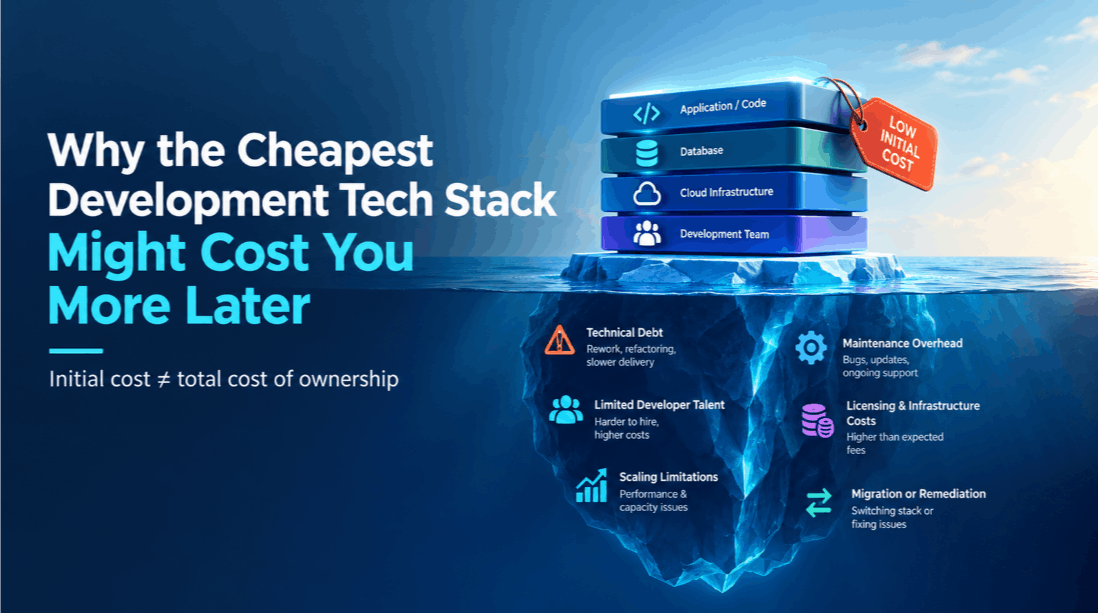
Hidden Costs Add Up
While subscription pricing looks predictable, costs often surface elsewhere:
- Additional tools to fill feature gaps
- Custom plugins or third-party connectors
- Time lost adapting processes to the software
Over time, businesses realise they’re paying repeatedly to approximate something that could have been designed properly from the start.
Where Custom Software Earns Its Keep
Custom software is not inherently better - it’s just more intentional.
Built Around Real Workflows
Instead of asking teams to “use the system correctly,” custom platforms reflect how work actually happens. Approvals follow real authority lines. Data lives where teams expect it. Reporting matches how decisions are made.
This is especially relevant for mid-market companies that have outgrown generic tools but aren’t operating at enterprise scale.
Integration Becomes a Strength, Not a Liability
Custom systems are often designed as connective tissue:
- ERP talking directly to operations
- CRM data flowing into finance and forecasting
- Reporting pulled from a single source of truth
For businesses working with an experienced IT solutions provider, this integration focus often delivers more value than flashy features.
Long-Term Cost Predictability
While custom development requires upfront investment, the long-term economics can be clearer:
- No per-user pricing penalties
- Features built only when they add value
- Ownership over roadmap and data
This matters for businesses planning stable growth rather than rapid tool switching.
The Middle Ground Many Businesses Miss
The decision isn’t always binary.
Hybrid Approaches Work
Some of the most effective systems combine both approaches:
- Off-the-shelf accounting or payroll
- Custom middleware to connect systems
- Purpose-built dashboards for leadership
This reduces risk while still addressing core operational pain points.
Custom Doesn’t Mean “Big Bang”
Custom software doesn’t have to start as a massive platform. Many successful projects begin with:
- One process causing repeated delays
- One reporting gap affecting decisions
- One integration that consumes too much manual effort
Solving one high-impact problem can help in building confidence and creating internal alignment.
Main Questions to Answer While Deciding
Instead of "Which is cheaper?" or "Which is faster?" for simple cost-benefit analysis, it should be more about this kind of consideration:
How Unique Are Our Processes, Really?
If your competitive advantage depends on how work gets done, custom software may protect that edge.
Where Do We Lose Time or Accuracy Today?
Repeated manual work is often the clearest signal that a system no longer fits.
How Long Do We Expect This Solution to Last?
Short-term needs favour off-the-shelf tools. Long-term operational platforms often justify custom investment.
Do We Have the Right Partner?
Custom software succeeds or fails based on design discipline, not just code quality. An experienced IT solutions provider helps translate business reality into technical decisions.
Common Mistakes to Avoid
Choosing Custom Too Early
Building before processes stabilise often locks in assumptions that quickly become outdated.
Over-Customising Off-the-Shelf Tools
Excessive plugins and hacks can be harder to maintain than a clean custom build.
Treating Software as a One-Time Project
Both approaches require ongoing ownership. The difference is whether you control the direction.
A Practical Example
A growing logistics firm initially adopted multiple SaaS tools - one for orders, one for inventory, one for reporting. Each worked fine individually. Together, they created delays, mismatched data, and frustrated teams.
Rather than replacing everything, the company commissioned a custom operational layer that unified data and automated handoffs. The result wasn’t a flashy platform - it was fewer errors, faster onboarding, and clearer visibility across the business.
That’s often what successful custom software looks like in practice.
Looking Ahead: Software as Infrastructure
As businesses become more data-driven, software decisions increasingly resemble infrastructure choices. Off-the-shelf tools will continue to improve, but they’ll always be designed for the average case.
Custom software, especially when approached incrementally and thoughtfully, allows businesses to build systems that reflect how they actually operate - not how a product roadmap assumes they should.
The best choice isn’t about trends or technology. It’s about alignment - between tools, teams, and long-term intent. When that alignment exists, both paths can work. When it doesn’t, no software custom or otherwise will fix the problem.
Bhumi's Author Bio.
Bhumi Patel has vast experience in Project Execution & Operation management in multiple industries. Bhumi started her career in 2007 as an operation coordinator. After that she moved to Australia and started working as a Project Coordinator/ Management in 2013. Currently, she is the Client Partner - AUSTRALIA | NEW ZEALAND at Magneto IT Solutions - a leading Shopify development agency, where she works closely with clients to ensure smooth communication and project execution also forming long term partnerships. Bhumi obtained a Master of Business Administration (MBA) in Marketing & Finance between 2005 and 2007.

Post Comments