







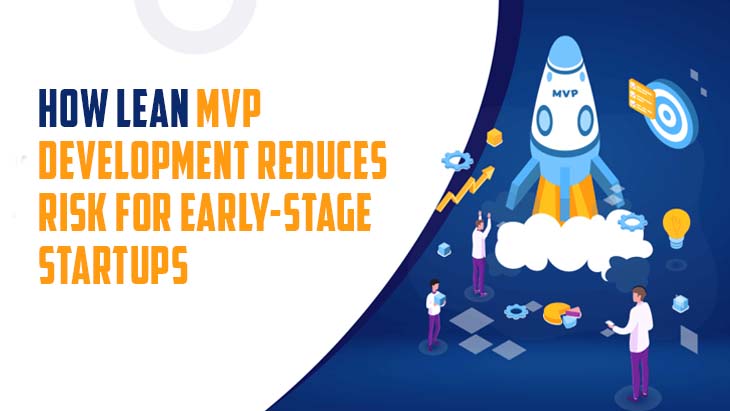

Beginning startups operate in an uncertain environment. Limited cash reserves, evolving customer expectations, intense competition, and investor pressure create a landscape filled with risk. In Australia, where funding cycles can be slower and development costs relatively high, early product decisions carry significant consequences.
To mitigate these risks, lean MVP development provides a structured approach. By testing core assumptions within constrained resources, startups can make informed decisions based on real user feedback rather than speculation. Lean execution does not mean compromising quality; it means building intentionally, validating intelligently, and scaling in a controlled manner. Many early-stage companies leverage structured mvp development services to define scope, prioritise essential features, and launch efficiently.
In this discussion, we explore how lean MVP development reduces technical, financial, and market risks, and how specialised mvp development services support sustainable early growth.
Understanding Risk in Early-Stage Startups
Before examining solutions, it is important to define the risks most startups face.
1. Market Risk
Will customers actually use and pay for the product?
Many founders assume demand exists based on anecdotal feedback or competitor success. Without validation, this assumption can lead to building features that users do not value.
2. Financial Risk
Will the business die out before it is able to take the flight?
It could be an expensive road to hiring experienced engineers, designers, and program managers in Australia. The costs are rapidly used up when you try to overbuild at an early stage.
3. Technical Risk
Can a product scale if it starts to gain traction?
An unstable system, poor performance, or expensive rework can arise as a result of wrong architectural decisions early on.
4. Strategic Risk
It's hard to say for sure if this project aligns with the business's long-term goals.
If we aren't clear on core value propositions, they get distracted by secondary features and lose sense.
In the Lean MVP development strategy, the philosophy of quickly building small increments allows core assumptions to be tested quickly before implementing full-features and compounding risks.
What Lean MVP Development Actually Means
Lean MVP development is not about launching an incomplete product. It is about delivering the smallest functional version of a product that solves a clearly defined problem for a specific audience.
The goal is to:
- Validate demand
- Test usability
- Gather behavioural data
- Reduce unnecessary development
- Iterate based on evidence
This approach emphasises learning over perfection. Instead of investing heavily in a full-featured platform, startups prioritise essential functionality that demonstrates value.
Reducing Market Risk Through Validation
One of the most important benefits of lean MVP development is quick validation.
Instead of presuming what features users might like, businesses focus on what's absolutely vital to meet their problem statement.
User interviews, prototype testing, and early usage analytics yield validated signals on product-market fit.
With concrete commitments and hearty feedback from both directions, startups feel empowered to launch. With the solutions deemed unpopular, suitable adjustments can be made before hoards of money are invested.
An organized mvp development service can offer you valuable assistance in constructing validation metrics, discovery workshops, and product feature alignment with legitimate user needs.
Controlling Financial Risk and Preserving Runway
Capital efficiency is the watchword during the seed phase, with overengineering usually carrying an increased upfront cost of development and a longer time-to-market.
With an MVP, when it emphasizes lean methodology, the price- and development-free protocols that concern a business' financial side are strongly mitigated through:
Feature scoping is limited.
Development cycles are shortened.
Getting agreements on high-impact feature development.
No attempt to integrate unnecessary integrations
At seed, startups can perform high-caliber tests without breaking the bank. They are even more attractive to investors in future talks because investors now expect to see well-managed capital and resources.
It is key to work closely with a Lean Product Development company so that goals are clearly set in stone and never compromised while in development mode.
Minimising Technical Risk Through Smart Architecture
One huge mistake is to equate lean with a fragile system. On the contrary, any lean development must stand up to architectural scrutiny.
So, these are factors essential for lean startups even at a stage of the MVP:
Use a scalable framework
Deploy modular design
Establish a foundation for safety in the management of data
Develop with future integration in mind
Lean development is sustained not by cutting corners, but by maintaining disciplined adaptability while resisting unnecessary complexity. Not every feature is irrelevant forever; many will become important later. However, in the early stages, teams must build strictly around real, validated requirements rather than speculative enhancements or premature automation.
An experienced product engineering agency helps strike the right balance between speed and structural integrity. The objective is to create an MVP that is robust enough to support early traction while remaining flexible for future scalability.
Improving Decision-Making with Real Data
Founders often go by their gut feeling in making early product decisions. While it is intuition that spawns marvels of innovation, intuition should not go against evidence.
Lean MVP development thrives in data-informed iteration. When this method of feedback is applied to the ongoing treatment of the product, usage patterns, retention rates, and behaviours would give an idea of what is or is not meant for further subscriptions.
This feedback loop reduces strategic risk by:
Uncovering poorly-performing features
Brands wary about unexpected user behavior
Disclosing ambiguities in pricing strategies
Revealing discernible impediments to scalability
Instead of heading towards long development cycles in the absence of feedback, these start-ups rather operate on short cycles defined by metrics.
Accelerating Time to Market
Speed is not just a competitive advantage; it is a risk mitigation strategy.
The farther one travels down the development track, the more vulnerable to competitive entry shall be products and services, especially when market conditions keep changing. Three types of risks are brought by the development period:
Market Levels
Competition
Burnout
Lean MVP development aims to shorten the path from initial concept to launch. Entry into the market the soonest is ideal for the experiencing of real-world validation while competitors are waiting for technology and business build-up.
A disciplined object development company can offer sprint-based workflows, thus ensuring focused and transparent progress.
Aligning Product with Investor Expectations
Australians' carefully consider before committing capital investments by expecting evidence of an initial positive response or traction; founders can use an interesting makeshift or limited viable product built with less investment while providing:
User engagement score
Recently demonstrated controlled growth of customers and revenues
Responsible management of personnel and operation
A preview of the technical feasibility
The founders provide real validation learnings and user engagement metrics during funding talks instead of an exempted roadmap. For instance, based on the assumption that Lean development generally purports to reduce the risk of submitting an overbuilt but not yet empirically tested product for evaluation, investors are often interested in the Promethean chunk of the technology validation argument in comparison with the conglomerate's apparently circular, undirected, costly, and time-consuming exercise.
Avoiding Feature Creep and Scope Expansion
Scope encompasses one of the most common risks code products encounter in the early stages of their development. Founders under the illusion that they should respond to every bit of feedback will accumulate pressure.
The Lean methodology argues that putting features in order of precedence is a type of theory as well:
Whether the feature tackles the single most imminent-of-them-all problems
Whether it can stand a series of validated learning
Is the feature important for scaling up on initial acquiescence?
In the case of the "no," defer the feature.
In practicing discipline in deciding priorities, these rules will not allow the scope to consume resources early.
Supporting Sustainable Scaling
The MVP lean development does not stop at just its launch. It actually lays a foundation to help controlled scaling.
There are options available to a validated venture for:
- Gradually introducing complex functionality.
- Enhancing the performance.
- Strengthening the infrastructure.
- Extending to the market.
The scalability phase becomes more manageable and cost-efficient because the product would have avoided excessive feature requests. A product development agency will, therefore, be instrumental in the MVP growth stage and beyond as it makes sure the architectural evolution marries consumer demand validities, and also is operationally sound.
Execution of a Lean MVP: How to Do It!
For startups aiming to catch a dose of Lean principles, a structured implementation could involve the following:
Define your main problem and make it specific.
There is a single target audience.
Do identify the minimum feature that constitutes value.
Build with short sprints that can be measured, and continue with constructive behaviour.
Go out in the wild to gather data-they'll act!
Iterate based on actual usage. Never make assumptions.
This phase is like a drug, as it'll not only reduce uncertainty that otherwise takes place at every level, but will calm reliance on calculation with observable learning.
Conclusion
Early-stage startups look at risk intrinsically amidst financial, technical, and market dimensions. Lean MVP creation puts up a systematic framework towards nullifying the above risks amidst testing execution, validation, and refinement.
Cutting out of the extraneous layers of MVP protocols intrusively guarantees the extension of the fiscal sustenance, enhances credibility with the investors, and corroborates the value of putting out-of-the-process products evidentially.
Whether internally funded or with specialized mvp shops, structured product development communities or experienced product development agencies, the fundamentals, however, never change; build explicitly, validate early, and scale responsibly.
In the world of the competitive Australian startup ecosystem modelled on just another instance of a cost-conscious scheme, lean execution therefore boils down not to the most efficient yet profoundly crucial strategy to be embraced generously.



Post Comments