







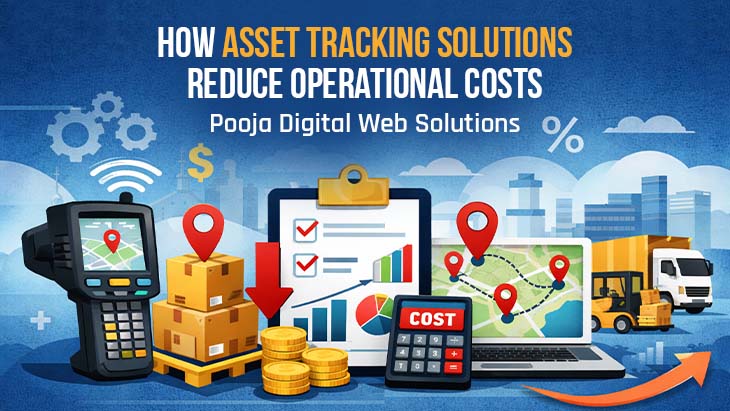

Asset management remains a valuable tool for businesses to manage their spending. Asset tracking solutions have already become a must-have asset to help reduce existing operational costs. Employing a technology to keep track of the resources allows organizations to have increased visibility and actionable control, which leads to enhanced productivity and savings.
Enhancing Visibility and Accountability
Asset tracking solutions help businesses in keeping real-time records of their equipment location and status. This transparency allows managers to quickly find unused or misplaced assets. This minimizes the risk of acquiring things you do not need. This also prevents loss and theft of assets. Good record keeping breeds accountability; when staff know that assets are being tracked, they tend to be more careful and responsible with them.
Reducing Redundant Purchases
Keeping track of things can prevent an organization from purchasing redundant items. Asset tracking systems also produce comprehensive records, showing exactly what is available for use and helping to cut down on any confusion as to what is already in inventory. This minimizes the wasteful expenditure and makes sure that no money is spent on unnecessary restocking.
Improving Maintenance Schedules
Preventative maintenance enables assets to retain their value and last longer. Organizations can plan maintenance before the products unexpectedly break down using an asset tracking solution. This reduces repair costs and prevents downtime, maintaining smooth operations with no expensive interruptions.
Increasing Staff Productivity
Employees search less for tools or equipment when access to assets is simpler. Asset tracking devices improve workflows through easy accessibility of data. It improves overall efficiency as staff members do not have to waste hours looking for misplaced items and can instead focus on more important tasks.
Optimizing Asset Utilization
Collections of goods or assets can be tracked, allowing organizations to see how their resources are being used and determine what is underutilized. Then, decision makers can disperse assets where they are needed most after assessing this data. Doing so helps in better utilization of resources, which leads to reduced idle resources and, therefore, eliminates unnecessary storage costs.
Minimizing Loss and Theft
Loss and theft of tools can cause huge financial loss. Tracking solutions prevent this loss and provide a faster and easier method to find any stolen objects, too. Access to the data, having records of asset locations and movements, helps organizations find discrepancies rapidly and deliver corrective action to curb further losses.
Supporting Informed Decision-Making
Planning and budgeting become a lot simpler with the data that asset tracking systems provide. Precise insight into asset states and utilization enables leaders to make wiser investment decisions. This minimizes overspending and enables more effective use of resources.
Streamlining Administrative Processes
Filing information manually can cause mistakes and delays. Manual data collection and reporting processes are error-prone, which can easily be avoided through asset tracking solutions that automate these processes. Automation gives administrative staff time to focus on other priorities and reduces costs as the time spent correcting errors is eliminated.
Complying With Regulations
Many sectors need companies to preserve asset records. Compliance becomes easy with asset tracking solutions as these provide report generation that complies with regulatory standards. This minimizes the potential risk of being fined or penalized on the basis of incomplete documentation, which saves money in the long run.
Facilitating Asset Recovery
Without proper tracking, assets that are lost or misplaced may be next to impossible to recover. Asset tracking solutions streamline recovery efforts by showing exact locations. This allows organizations to retrieve valuable objects faster, minimizing replacement costs and ensuring operational services are not disrupted.
Reducing Insurance Premiums
Organizations with effective asset management practices tend to enjoy better insurance premiums. A track record of asset tracking can prove to lenders your commitment to reducing risk and could get you better terms. Reduced insurance premiums are a key factor impacting the company-wide initiatives to lower operational costs.
Conclusion
Asset tracking solutions reduce costs to a great extent by increasing visibility, enhancing efficiency, and helping in better decision-making. These solutions minimize waste, avoid spoilage, and automate administrative functions. Asset tracking solutions allow organizations to stay in charge of their resources, increasing productivity while saving big. For any organization looking to reduce its operational costs and to function with more operational intelligence, adopting this technology comes off as the right step forward.


Post Comments