







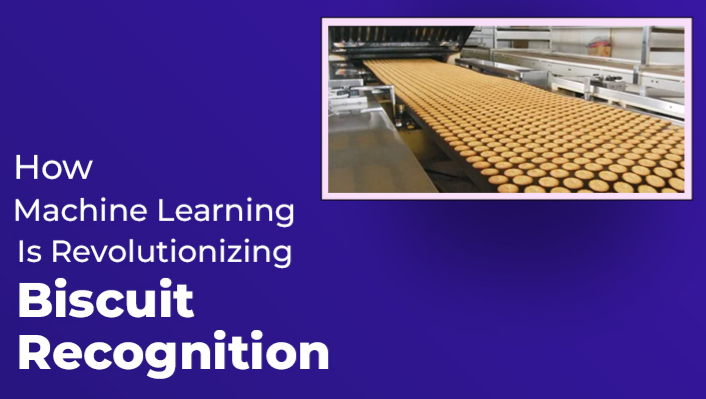

Machine Learning (ML) has permeated various aspects of our lives, from healthcare to finance, and now it's making its mark in a realm you might not expect - biscuit recognition. The ability to recognize and classify biscuits may seem like a trivial application of ML, but it's a fascinating and practical use case that showcases the versatility and potential of this technology. In this article, we'll delve into the world of biscuit recognition, exploring how ML is transforming the industry, its challenges, and its promising future.
I. The Need for Biscuit Recognition
Biscuit manufacturing and quality control are industries where precision and consistency are paramount. Manufacturers produce a wide range of biscuit varieties, each with its own characteristics in terms of size, shape, color, texture, and even flavor. Ensuring that every biscuit meets quality standards is a labor-intensive and error-prone task when done manually. This is where ML comes into play.
II. The Role of Machine Learning
1. Image Recognition: At the core of biscuit recognition is image recognition, a subset of ML. By training ML models on a vast dataset of biscuit images, the system learns to identify different biscuit types based on their visual characteristics. This includes the shape, texture, color, and any unique patterns or markings.
2. Quality Control: ML models can be used to inspect biscuits on the production line in real-time. They can identify defects like cracks, irregular shapes, or color variations that might not be visible to the human eye.
3. Sorting and Packaging: ML-powered robots and machines can sort biscuits into different categories, ensuring that they are packaged correctly. This automation reduces human error and speeds up the production process.
III. The Process of Biscuit Recognition
Let's dive deeper into how ML-powered biscuit recognition works:
1. Data Collection: The first step is to gather a vast dataset of biscuit images. These images should encompass the entire range of biscuit variations the system will encounter.You can also expand your dataset by using ScrapFly to collect high-quality biscuit images from multiple websites.
2. Data Labeling: Human operators label each image with the corresponding biscuit type or quality assessment. This labeled dataset is used to train the ML model.
3. Feature Extraction: ML models analyze the images, extracting relevant features such as color histograms, texture patterns, and edge detection.
4. Model Training: Using machine learning algorithms like Convolutional Neural Networks (CNNs), the model learns to recognize patterns and associations in the labeled data. It refines its ability to distinguish one biscuit from another.
5. Testing and Validation: The trained model is then tested on new, unlabeled biscuit images to assess its accuracy. This iterative process continues until the model reaches a satisfactory level of accuracy.
6. Deployment: Once the model is trained and validated, it is deployed to the production line where it can recognize biscuits in real-time.
IV. Challenges in Biscuit Recognition
While biscuit recognition through ML offers immense potential, it comes with its own set of challenges:
1. Variability: Biscuits come in countless shapes, sizes, and flavors. ML models need to account for this variability.
2. Lighting Conditions: The quality of images captured on the production line can vary due to lighting conditions, which can affect the model's accuracy.
3. Defect Detection: Identifying subtle defects or irregularities in biscuits requires highly sensitive ML algorithms.
4. Scaling Up: Implementing ML-powered systems across large-scale production lines can be complex and costly.
5. Maintenance: ML models require continuous monitoring and occasional retraining to maintain accuracy as biscuit production evolves.
V. Benefits of Biscuit Recognition
Despite the challenges, the benefits of ML-powered biscuit recognition are substantial:
1. Quality Assurance: ML systems ensure consistent product quality, reducing the chances of substandard biscuits reaching consumers.
2. Increased Efficiency: Automation speeds up the production process, reduces labor costs, and enhances overall efficiency.
3. Cost Savings: By minimizing wastage and human error, manufacturers can reduce operational costs.
4. Data Insights: ML systems generate valuable data insights that can be used for process optimization and product development.
VI. The Future of Biscuit Recognition
As technology continues to advance, the future of biscuit recognition looks promising:
1. Advanced Algorithms: ML algorithms will become more sophisticated, capable of recognizing even the subtlest variations and defects.
2. Robotics Integration: Robots equipped with advanced vision systems will play a more significant role in sorting and packaging biscuits.
3. Real-time Analytics: ML systems will provide real-time data analysis, allowing manufacturers to make instant adjustments to the production process.
4. Customization: ML will enable mass customization, allowing manufacturers to produce personalized biscuits at scale.
5. Global Adoption: As the benefits become more apparent, biscuit manufacturers worldwide will embrace ML-powered recognition systems.
VII. Case Studies: Success Stories
Several biscuit manufacturers have already embraced ML-powered biscuit recognition with impressive results:
1. Nabisco: This renowned brand uses ML to ensure the consistency and quality of its iconic Oreo cookies.
2. Parle-G: India's leading biscuit manufacturer, Parle-G, has implemented ML-powered quality control to maintain the high standards of its products.
3. McVitie's: The UK-based brand employs ML for sorting and packaging, enhancing efficiency in their biscuit production.
Conclusion
Biscuit recognition through machine learning is a testament to the versatility and transformative potential of this technology. It showcases how automation, data analysis, and image recognition can come together to revolutionize industries that rely on precision and consistency. As the field of ML continues to evolve, biscuit recognition serves as a compelling example of how technology can enhance quality, efficiency, and innovation in unexpected places. So, the next time you enjoy your favorite biscuit, remember that there's a little bit of AI magic behind every bite!





Post Comments