







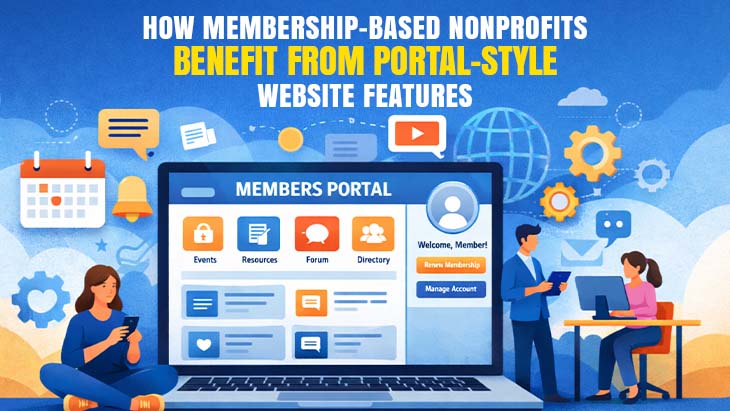

Nonprofits that are based on membership have special problems in reaching their communities, communications, and value delivery to their members. In the traditional websites, a portal-like functionality can help transform the digital presence of a nonprofit into an interactive and dynamic process, unlike the traditional websites that are merely a hub of static information. Having introduced the protection of enclosed zones, customized information, and the opportunities to control the accounts, nonprofits will be able to improve the relationships with their supporters and simplify the internal processes. These features can be reached easily through a smart nonprofit website design that is easily understandable by the staff and members alike.
Portal-like Web services also allow nonprofits that are membership-based to build a community on the Internet. Members are able to gain access to exclusive material, engage in discussions, and share with other members with the same interests or objectives. These interactive aspects will promote greater frequency of interaction and loyalty as the members will feel appreciated and belonging to the organization. Nonprofit websites should be designed in a manner that favors ease of use to ensure that these portals are user-friendly and will not cause frustration and persuade users of continued use.
Enhancing Member Engagement
Portal-style functionality enables nonprofits to customize communications and content to its respective members. The members feel a more meaningful relationship with the organization by getting access to customized dashboards, event registrations, or other pertinent resources. This can also be used to allow the nonprofits to gain an understanding of member interests and behaviours which can be used in future programmes and outreach plans. The integration of these tools in the nonprofit website design assists organisations in establishing a better and more active society in the long run.
Interaction between the members is also enhanced in case the nonprofits provide interactive features like forums, voting, or sending of private messages. These aspects promote contributions, feedback, and discussions among members, as well as initiatives. The loyalty of members and willingness to contribute to the organization is enhanced when members feel that their voices are heard and that they are able to influence the activities of the organization. Website design for nonprofits to incorporate these portal-like features give a smooth user experience to the content, and members are able to easily access and utilize these tools.
Streamlining Administrative Functions
Portal-like functions are also advantageous to the inner workings of nonprofits. Membership administration, payment and event registration can all be done in a secure centralized portal. This helps cut down on administrative work and minimizes errors as well as allowing the staff to concentrate on strategic initiatives. Such functions are seamlessly incorporated into a well-planned nonprofit web site design which enables the smooth navigation of processes by the members and the staff.
Nonprofit operations are made even easier by automated reminders, member tracking and reporting tools. Nonprofit operations are made even easier by automated reminders, member tracking and reporting tools. By leveraging specialized tools to organize member data, employees are able to track renewals, handle communications and analyze trends of engagement with little human intervention. These efficiencies do not only enhance organization effectiveness but also lead to the professional and even consistent experience of members. Web 2.0 design of nonprofits that focus on integration and accessibility guarantees these administrative tools facilitate long-term development and sustainability.
Supporting Fundraising and Donations
Portal websites have the potential to boost the membership-based nonprofits in terms of fundraising. The donation forms or pledge campaigns, or recurring contribution options can be easily accessed by the members in their individualized portal. The ease of use and secure interface will help attract users to make their contributions on time and earn trust in the organization. Web design of nonprofit making organizations, which includes such features, can enhance the rate of conversion of donations and aid in financial aspirations of such organizations.
Besides the regular donations, the portal functions may support specific campaign and reward initiatives. It allows the members to see their giving history and get acknowledgments and also enjoy exclusive benefits due to their contribution. Such openness and awareness makes the donor relationship stronger and inspires them to further contribute. Secure, easy interactions through web design of nonprofits boosts the fundraising, as well as the satisfaction of the members.
Providing Educational and Resource Opportunities
Membership portals enable nonprofits to provide specific educational material and resources to particular groups of members. The portal can safely store courses, webinars, research reports and training materials that can be easily accessed. The centralized access will provide the members with access to the appropriate information in the shortest period possible, promoting professional growth and continuing interaction. These resources are attractive and accessible by means of nonprofit web design that facilitates a multimedia content and structure navigation.
Nonprofits make themselves worthy assets to their communities by providing specific educational opportunities. The members feel a greater value to their membership and this may enhance retention and attract new supporters. Examples of portal-style websites which incorporate learning management systems and resource libraries can show how careful design of websites to meet nonprofits can focus on the mission of the organization and address the needs of the members as they emerge.
Conclusion
Portal-like Web interfaces help nonprofits of the membership type to accelerate their work, improve the engagement, support fundraising, and assist with valuable educational materials. Through adoption of secure and user friendly portals, organizations are able to make the process of membership more interactive and valuable besides enhancing their level of internal efficiency. Such an investment in nonprofit web design and web design of nonprofits with these portal components eventually improves the communities and leads to the success of the organization in the long-term.



Post Comments