







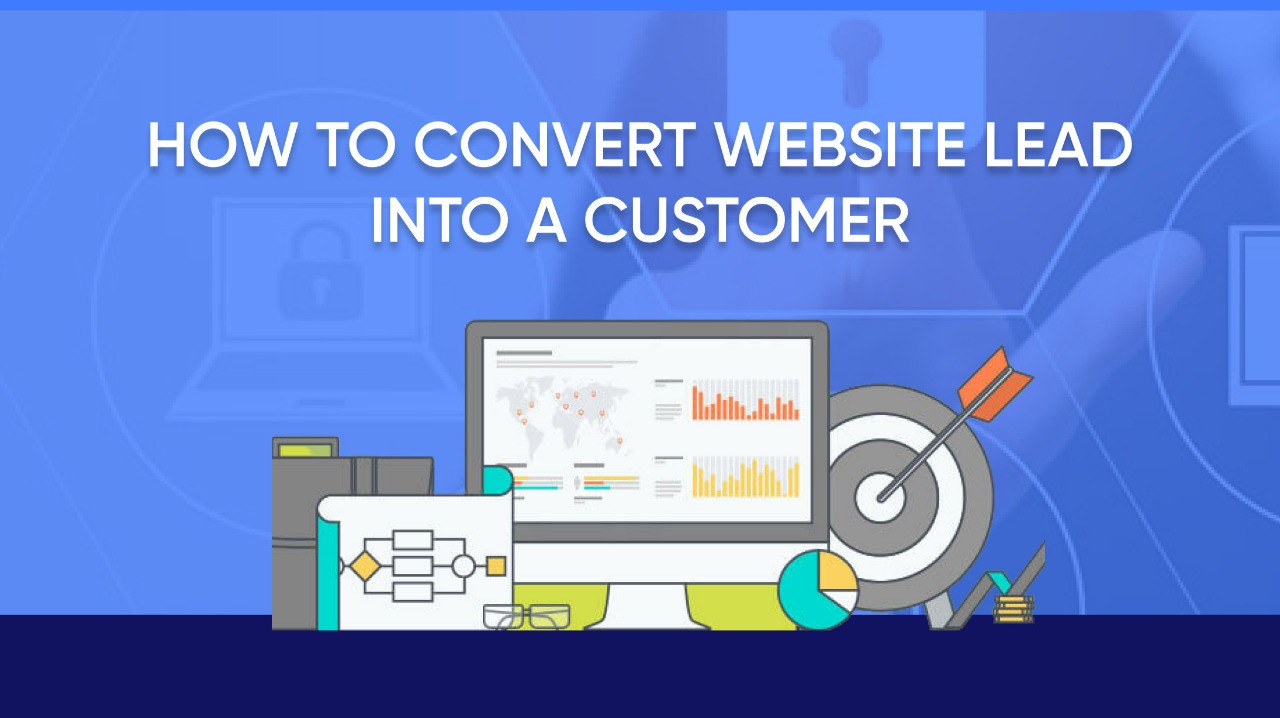

Although a digital presence can increase marketing results, your CEO won't be overly excited if there are no actual sales coming from your digital marketing efforts.
Because of this, your business must focus on lead-to-customer conversion or hire a Website development company. According to HubSpot's State of Inbound report, 74% of marketing and sales teams concentrate most of their marketing efforts on turning leads into customers.
Consider changing your conversion activities if you have trouble controlling the results of your marketing efforts.
What Is Lead Conversion?
If you master the fundamentals and know how to apply them, learning the ins and outs of Website leads conversion could be the most powerful tool for your company.
According to Juwairiya Kembo, a digital public relations specialist at seoplus+, "lead conversion is a marketing process of engaging and converting prospect leads into paying consumers." Customers are pushed toward making a purchase choice through this procedure, which encourages them to acquire goods or services.
Your marketing and sales team is crucial to this process since it is their responsibility to steer potential customers into sales possibilities. Their objective is to develop a relationship with them in order to aid them in their buying process and make it simpler for them to convert leads and close sales.
Top Techniques For Online Lead To Customer Conversion
Even if your company may spend money maintaining a regular blog, adding metadata to each page, and even keeping an eye on social media management, these efforts might or might not result in significant increases in sales. In terms of digital lead nurturing, many companies neglect to take the ball.
One thing is to gather interested leads; another is to win their business. HubSpot's State of Inbound report provides valuable information about marketing initiatives.
Tips on How to Convert a Website Lead Into a Customer?
1. Increase the Number of Forms on the Most Popular Pages.
Before you start, it's crucial to analyze your existing lead-generating performance so you can monitor your progress and identify the areas that most require improvement. You may not even be aware of the fact that some of your pages could be great lead generators.
Start by doing an audit of your lead generators, which are the sources of the majority of your online traffic and marketing.
2. Evaluate each Lead Generator's Effectiveness.
Using a service like Website Grader, which assesses your lead generation sources (including landing pages and CTAs) and offers suggestions on how to enhance your current content, you can determine how each of your present lead generators is helping your business.
Additionally, you can contrast successful landing pages with less successful ones. Let's imagine, for illustration, that out of 1,000 visitors to Landing Page A, 10 of them filled out the form and become leads. You would have a 1% conversion rate for Landing Page A. Take another landing page, Landing Page B, for example, which converts 50 visitors into leads for every 1,000 visits.
That would be a fantastic 5% conversion rate!
3. Make each Stage of the Lead Creation Process more Effective.
You better not link to a snow-clearing consultation from a blog post about "10 Ways To Improve Your Lawn Care Regimen" if your visitor arrived there after searching for "lawn care tips" on your website. Make sure your offers are pertinent to the page they are on in order to capitalize on website users' enthusiasm for a certain topic.
You can start gaining knowledge about a visitor's conversion path as soon as they arrive on your website. This process begins when a visitor comes to your website and hopefully concludes with them submitting a form and turning it into a lead.
But occasionally a visitor's journey doesn't lead to the intended destination. When it occurs, you can optimize the conversion path.
4. Start with a Basic CTA on your Homepage.
The CTA is what keeps a person's attention if the design of your homepage is what draws them in. Don't constantly invite visitors to view your most extensive or intricate stuff, nevertheless.
Your site should provide a free trial or a subscription to a recurring campaign, like a newsletter since it is at the top of the marketing funnel.
5. Make E-books Available for Download on Particular Blog Topics.
Making blog posts that offer an ebook or whitepaper that allows visitors to your website to learn more about the subject they just read about on your blog is another non-intrusive strategy to increase interest in your company.
This is the point where lead generation and SEO meet.
Your method for gaining the page authority required to rank your website in Google is to create blog material. This type of lead generation is quite significant because organic visitors from Google are frequently more eager to search for solutions to an issue you can solve.
Start by doing keyword research on a subject that is pertinent to your industry, then write a series of blog entries on it. Then, write a report that explores this subject in much more detail. Create a PDF version of this report that readers of your blog may access by providing their name, organization, and email address.
6. Build a Live Chat Feature on your Website.
Not only are live chat services becoming more sophisticated, but more users are also coming to demand them while researching potential vendors. This suggests that you might be passing up a significant lead source.
Examine your website to determine which pages visitors spend the most of their time on in order to create leads through live chat.
You can add a live chat feature to the sites where customers are most likely to request assistance or information if you have the necessary development resources.
This enables you to conversely gather and record information regarding their product requirements as you respond to their inquiries.
7. Make your CTAs unique.
You may customize each unique web visitor's experience by using dynamic content. Visitors to your website will see graphics, buttons, and product choices that are specially selected based on their preferences, previous purchases, or pages they have read.
Even better, customized calls to action convert visitors 42% more effectively than standard calls to action. Alternatively, dynamic content and on-page personalization help you generate more leads.
8. Take care of your leads.
Keep in mind that no lead will suddenly become a customer. You can only get quality leads if you nurture them.
After a lead submits a form on your landing page, add them to a process so they don't forget about you and send them relevant, helpful material. With pertinent follow-up emails that include quality content, lead nurturing should get started. As you raise them, find out as much as you can about them, and then make every subsequent send more suited to them.
The ability to successfully convert users into customers makes it easier than ever to run or market an e-commerce business online. Increasing website traffic is insufficient. Additionally, you need to keep people interested so they return and turn them into paying clients.



Post Comments