







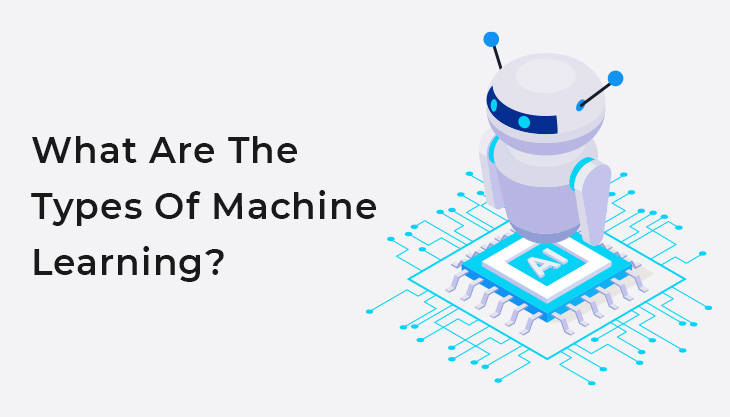

At an advanced level, machine learning is the investigation of showing a PC program or calculation how to develop a set task given. On the exploration side of things, we can view machine learning from the perspective of hypothetical & numerical displaying of the way this functions. Notwithstanding, it is basically the investigation of how to put together applications that show this iterative improvement.
Machine learning is a subset of AI, which empowers the machine to naturally learn from information, develop execution from previous encounters, and make forecasts. It contains a bunch of calculations that work on a gigantic measure of information. Information is given to these calculations to prepare them, and based on preparing, they construct the model and play out a particular assignment.
In a world immersed in artificial reasoning, machine learning, and over-energetic discussion about both, it is fascinating to figure out how to comprehend and recognize the sorts of machine learning we might experience. For the usual PC user, this can appear as understanding the kinds of machine learning and how they might display themselves in applications we use. Also, for the machine learning company making these applications, it is fundamental to know the sorts of machine learning. Thus, for some random task you might experience, you can make the legitimate learning climate and comprehend why what you did worked.
At its core, machine learning utilizes modified calculations that get and dissect input information to foresee estimates inside an adequate reach. As we feed new information to these calculations, they learn and enhance their tasks to develop execution further, creating 'intelligence' over the long haul.
How Does Machine Learning Work?
UC Berkeley (interface dwells outside IBM) breaks out the learning arrangement of a machine learning technology into three fundamental parts.
A Decision Process:
As a rule, machine learning calculations make a forecast or order. Because of a few input information, which can be named or unlabeled, your algorithm will deliver an estimate about a trend in the data.
An Error Function:
An error function assesses the forecast of the model. Assuming there are known models, a blunder capacity can correlate with surveying the exactness of the model.
A Model Optimization Process:
If the model can fit better to the informative items in the preparation set, then, at that point, loads are acclimated to lessen the inconsistency between the known model and the model gauge. The calculation will rehash this assessment and advance cycle, refreshing loads independently until an edge of precision has been met.
What Are The Types Of Machine Learning?
There are four kinds of machine learning programs: supervised, semi-supervised, unsupervised, and reinforcement.
1. Supervised learning
In supervised learning, the machine learns by cue. The administrator furnishes the machine learning calculation with a known dataset that incorporates desired sources of information, and the algorithm should track down a strategy to decide how to show up at those data sources and results. While the administrator knows the right solutions to the difficulty, the calculation distinguishes designs in information, gains from perceptions, and makes forecasts. The algorithm makes forecasts and is modified by the administrator - and this cycle proceeds until the calculation accomplishes a significant degree of exactness/execution.
Under supervised learning, we have - Classification, Regression, & Forecasting.
Classification: In classification assignments, the machine learning program should decide from noticed qualities what category groundbreaking perceptions have a place in. For instance, while sifting messages as 'spam' or 'not spam', the program should look at existing observational information and channel the messages appropriately.
Regression: In regression tasks, the machine learning program should assess - and comprehend - the connections among factors. Regression examination centers around one ward variable and a progression of other changing factors - making it especially helpful for expectation and determining.
Forecasting: Forecasting is the method that makes expectations about the future based on various information and is ordinarily used to dissect patterns.
2. Semi-supervised learning
Semi-supervised learning is like supervised learning. Yet it utilizes both labeled and unlabelled information. Labeled information is data that has significant labels so the calculation can comprehend the information, while unlabelled information comes up short on data. By utilizing this blend, machine learning calculations can figure out how to name unlabelled information.
3. Unsupervised learning
Here, the machine learning calculation concentrates on information to recognize designs. There is no response key or human administrator to give guidance.
The machine decides the connections and correlations by dissecting accessible information. In an unaided learning process, the machine learning calculation deciphers huge informational collections and addresses that information in a like manner. The algorithm attempts to put together that information here and there to depict its construction. It may mean gathering the information into bunches or orchestrating it in a way that looks more coordinated.
As it surveys more information, its capacity to settle on choices on that information continuously improves and turns out to be more refined.
Unsupervised learning is composed of the following -
Clustering: Clustering includes gathering sets of comparative information (in light of characterized rules). It helps to divide data into a few categories & perform an investigation on every informational index to track down designs.
Dimension reduction: Dimension reduction lessens the number of factors considered to observe the specific data required.
4. Reinforcement learning
Reinforcement learning centers around controlled learning processes, wherein a machine learning calculation is provided with tasks, criteria, and end estimates. By characterizing the standards, the machine learning calculation then, at that point, attempts to investigate various choices and potential outcomes, observing and assessing each result to figure out which one is ideal. Reinforcement learning shows machine experimentation. It gains from previous encounters and starts to adjust its methodology because of the circumstance to accomplish the most ideal outcome.
Conclusion
Machine learning technologies streamline the exhibition of a framework while taking care of new occurrences of information through client characterized programming rationale for a given climate. Typical outcomes from machine learning applications generally incorporate web list items, ongoing advertisements on site pages and cell phones, email spam sifting, network interruption location, trend, and picture recognition. All of these are the side-effects of utilizing machine learning to examine volumes of information.
Customarily, information analysis was experimentation-based, a methodology that turned out to be progressively unrealistic because of the ascent of huge, heterogeneous informational collections. Machine learning gives savvy options to analyze a large amount of information. Machine learning companies plan to utilize this innovation to deliver precise outcomes and investigation by growing quick and effective calculations and information-driven models for constant information handling.



Post Comments