







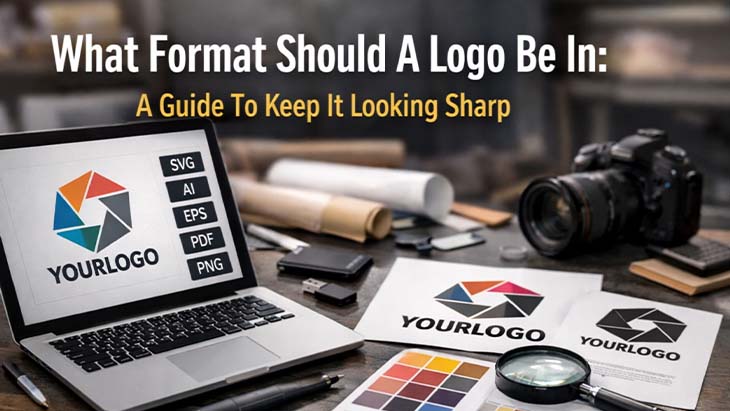

The first thing people are usually attracted to in a brand is the logo. It creates a negative impression if it appears blurred or twisted. Proper selection of a logo’s file format will keep your design looking sharp and professional whenever used, whether it is as a site header or printed banners.
Why Logo File Format Matters
What format should a logo be in? A logo file is an image and more. It is a major brand asset. The logo’s file format dictates how it is stored, displayed, and scaled. An incorrect format may result in pixelation, distorted colors, and slow loading on websites.
To illustrate the point using an example, in case you get a small JPG logo and place it on some big banner, then it is going to stretch and not look professional. A PNG may display nicer, but can nevertheless lose quality when resized excessively. This is not the case in vector formats such as the SVG.
If your current logo is in PDF, you can easily convert it to a scalable format. A tool like the PDF to SVG converter from PDF Guru is a quick way to move your design into a modern web-friendly format. This ensures your logo stays sharp on any device or screen size.
Vector vs Raster: Understanding the Difference
Logos may be saved in the form of vectors or raster images. Paths and shapes are used to make a vector file, like SVG, AI, and EPS. It is possible to resize them to any size and yet still maintain the quality. This renders them as the most suitable form used in the establishment of the logo of a website as well as other digital purposes. Such raster formats as JPG and PNG consist of pixels. And just as they looked good in their original size, they will become not very clear at a large size.
It is due to this fact that raster is not the best means to use when it comes to primary logo files. Nevertheless, there are applications in which raster formats come in handy. Different social media could necessitate the use of JPG or PNG uploads and these are quite adequate on fixed size displays. It is a good idea to have the master logo format saved in a form of vector and produce raster versions as the times demand. In this manner, you also address all use cases without jeopardizing the quality.
Common Logo File Formats Explained
These are some short notes about common logo file format and how they are mostly used:
* SVG (Scalable Vector Graphics): Perfect to be used online and in digital media. Can be scaled up without trade-off in quality and is lightweight.
* AI (Adobe Illustrator): It is primarily designed to be used by designers as a source file to edit.
* EPS (Encapsulated PostScript): An all-purpose, typically used print, vector format.
* PNG (Portable Network Graphics): Raster format that supports transparency; good over the web but it has a fixed size.
* JPG/JPEG: A raster format that uses lossy compression. It works well for photos but is not ideal for logos.
* PDF: Can contain vector data although not all the time directly web usable.
This is because by understanding these formats, you would be able to know which one you should use at any one time.
Why SVG Should Be Your Go-To Format
Scalable Vector Graphics is referred to as SVG. It is lightweight, resolution independent and all modern browsers support it. Logos and icons have optimum flexibility and quality in SVG.
SVG files use shapes and curves rather than pixels, and so scale perfectly, whether that is displaying a tiny favicon or at full-screen size. They also download quicker compared to large raster graphics that enhance performance of a site. This is of great significance to mobile visitors with slower connections.
It is also simple to edit without losing quality in SVG. Artists can alter the color or form, rather easily create anew. A logo with SVG, in responsive web design, takes various layouts without being deformed.
How to Convert and Manage Your Logo Files
If your logo is in a format like PDF or AI, converting it to SVG can unlock many benefits for digital use. Also, good file management is essential. Keep different versions of your logo organized:
- Master vector files (SVG, AI, EPS) for editing and scaling.
- Raster exports (PNG, JPG) for specific platforms.
- Clear naming conventions like “brand-logo.svg” or “brand-logo-black.png”.
Proper organization saves time and prevents mistakes when sending logos to clients or printers.
Conclusion
The appropriate format logo selection makes your brand appear sharp at all times. Have a vector copy, preferably SVG, as a main version at all times. One should solely use raster formats when a platform demands. And when your logo is PDF, simply use a simple conversion tool such as PDF Guru PDF to SVG converter to give your logos the best format for website logo available to use in the present age.





Post Comments