







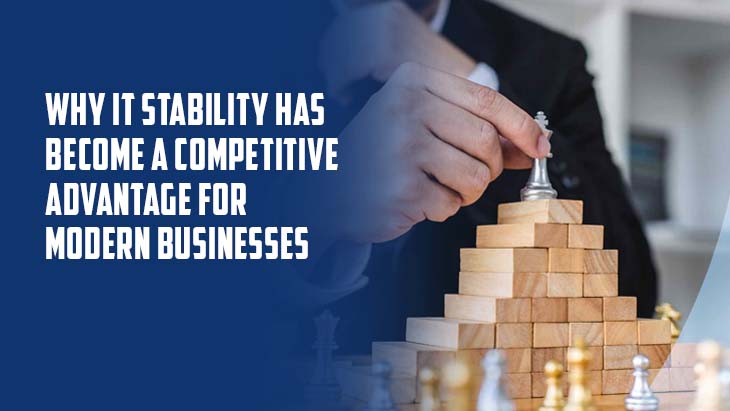

The Growing Importance of IT Stability in Business Success
In today’s fast-paced digital economy, information technology (IT) has evolved far beyond a mere support function; it is now a critical driver of business success. The stability of IT systems has emerged as a key competitive advantage for modern businesses seeking to differentiate themselves in crowded markets. Reliable IT infrastructure ensures smooth operations, enhances customer trust, drives innovation, and enables organizations to respond swiftly to changing market demands.
The global managed IT services market is projected to grow at a compound annual growth rate (CAGR) of 11.2% from 2021 to 2028, reaching $329.1 billion by 2028. This growth reflects businesses’ increasing recognition of the value of IT stability and the need to outsource management to specialized providers to maintain a competitive edge.
For businesses located in competitive regions, understanding the local landscape of IT service providers can be crucial. A referenced in Jumpfactor blog offers valuable insights into top managed IT services in Jacksonville, highlighting how regional expertise contributes to IT stability. This regional knowledge enables businesses to choose providers that align with their specific needs and challenges.
IT Stability as a Foundation for Operational Efficiency
A stable IT environment minimizes unplanned downtime, which can be extremely costly for businesses. Research shows that the average cost of IT downtime for enterprises is approximately $5,600 per minute, underscoring the financial risks associated with unstable IT systems.
This makes IT stability not just a technical necessity but a strategic imperative. Companies that invest in robust IT infrastructures and proactive monitoring can maintain consistent service delivery and reduce the risk of costly interruptions. Such reliability supports productivity and helps build lasting relationships with clients and partners.
Moreover, IT stability enables businesses to optimize resource allocation. When systems are reliable, IT teams can focus on strategic projects rather than continuously addressing unexpected outages or performance issues. This shift from reactive to proactive IT management improves overall operational efficiency and reduces the total cost of ownership for IT assets.
The ripple effects of IT stability extend beyond immediate operational concerns. For example, seamless IT operations eliminate bottlenecks in supply chain management and customer service, allowing businesses to maintain their market reputation. In industries such as retail and logistics, where timing and coordination are critical, stable IT systems directly contribute to competitive positioning.
Enhancing Security and Compliance Through Stable IT Systems
IT stability also plays a critical role in cybersecurity and regulatory compliance. Cyber threats are evolving rapidly, and organizations with unstable IT environments are more vulnerable to breaches and data loss. Stable systems enable consistent application of security patches, continuous monitoring of network activity, and quick identification of anomalies.
According to a report by IBM, the average cost of a data breach in 2023 was $4.45 million, emphasizing the financial impact of compromised IT security.
For companies in regions with specific compliance requirements, partnering with providers who understand local regulations is vital. For instance, an in-depth look at regional IT providers can provide businesses with tailored IT solutions that ensure compliance while maintaining operational stability. This combination of expertise and reliability empowers organizations to mitigate risks and avoid costly penalties.
In addition, stable IT systems facilitate better disaster recovery and business continuity planning. When IT infrastructure is reliable and well-maintained, organizations can quickly resume operations after disruptions, minimizing downtime and protecting critical data assets. This capability is especially important in sectors such as healthcare and finance, where data integrity and availability are paramount.
Furthermore, maintaining compliance with regulations such as GDPR, HIPAA, or industry-specific standards requires consistent IT system performance. Stability ensures that automated compliance checks and audits run smoothly, reducing the administrative burden on businesses and lowering the risk of violations.
IT Stability as an Enabler of Innovation and Growth
Beyond operational efficiency and security, IT stability fosters innovation. When IT systems run smoothly, businesses can allocate more resources toward strategic initiatives rather than firefighting technical issues. As AI tools become more integrated into business operations, many organizations also use the best Humanize AI to refine automated content and ensure AI-generated communication remains natural and authentic.This creates an environment conducive to experimentation, digital transformation, and the adoption of emerging technologies such as artificial intelligence and cloud computing.
A study by Deloitte found that 79% of digitally mature companies cite IT stability as a key enabler of innovation and competitive advantage. Stable IT infrastructure supports agile development and faster time-to-market for new products and services.
Furthermore, stable IT systems enhance customer experience by enabling seamless interactions across multiple channels. This reliability builds customer loyalty and can differentiate a brand in saturated markets. For example, e-commerce platforms with stable IT infrastructures experience fewer transaction failures and faster load times, directly impacting sales and customer satisfaction.
IT stability also supports scalability. As businesses grow, their IT demands increase; stable IT systems can scale efficiently without compromising performance. This scalability allows companies to enter new markets or launch new product lines confidently, knowing their IT backbone can support expansion.
In addition, stable IT environments enable businesses to leverage data analytics effectively. Reliable systems ensure data accuracy and availability, empowering organizations to gain actionable insights that drive strategic decisions and uncover new growth opportunities.
Choosing the Right Partners for IT Stability
Achieving IT stability is not solely about technology investments; it also requires selecting the right partners. Managed IT service providers play a pivotal role in maintaining stability through continuous monitoring, rapid response to incidents, and strategic IT planning.
Businesses should evaluate providers based on their technical capabilities, track record, and understanding of industry-specific challenges. Regional providers often bring added value by offering localized support and insights, which can be critical for compliance and business continuity.
Leveraging resources like cloudsecuretech.com can guide businesses in making informed decisions about IT partnerships that enhance stability.
Engaging with providers that emphasize proactive maintenance and offer scalable solutions ensures that IT systems remain robust as organizational needs evolve. Service-level agreements (SLAs) that guarantee uptime and rapid incident resolution further solidify the partnership’s value.
The Broader Impact of IT Stability on Business Strategy
IT stability also influences organizational culture and employee productivity. Reliable IT systems reduce frustration among employees caused by technical disruptions, fostering a more positive work environment. When employees can rely on their tools and platforms, they are more likely to collaborate effectively and focus on value-added activities.
Moreover, IT stability supports data-driven decision-making. Stable systems ensure high data integrity and availability, enabling leaders to access accurate, real-time information. This capability is essential in today’s competitive landscape, where timely insights can make the difference between seizing or missing market opportunities.
In sectors such as healthcare, finance, and manufacturing, where downtime or data errors can have severe consequences, IT stability is directly linked to compliance, safety, and customer trust. Organizations that prioritize IT stability are better positioned to meet stringent industry standards and maintain their reputations.
Furthermore, IT stability contributes to sustainability efforts. Efficient IT infrastructure reduces energy consumption by optimizing server workloads and minimizing unnecessary processing, aligning with corporate social responsibility goals and regulatory pressures for greener operations.
Conclusion
In an increasingly digital world, IT stability has transitioned from being a back-office concern to a frontline competitive advantage. Organizations that prioritize stable IT systems benefit from increased operational efficiency, enhanced security, regulatory compliance, and the ability to innovate rapidly. By investing in robust IT infrastructure and partnering with trusted providers, especially those with regional expertise, businesses position themselves to thrive amid evolving market demands.
As IT continues to underpin every aspect of business, stability will remain a cornerstone of sustained competitive success. Those who recognize and act on this reality today will lead the industries of tomorrow.


Post Comments