







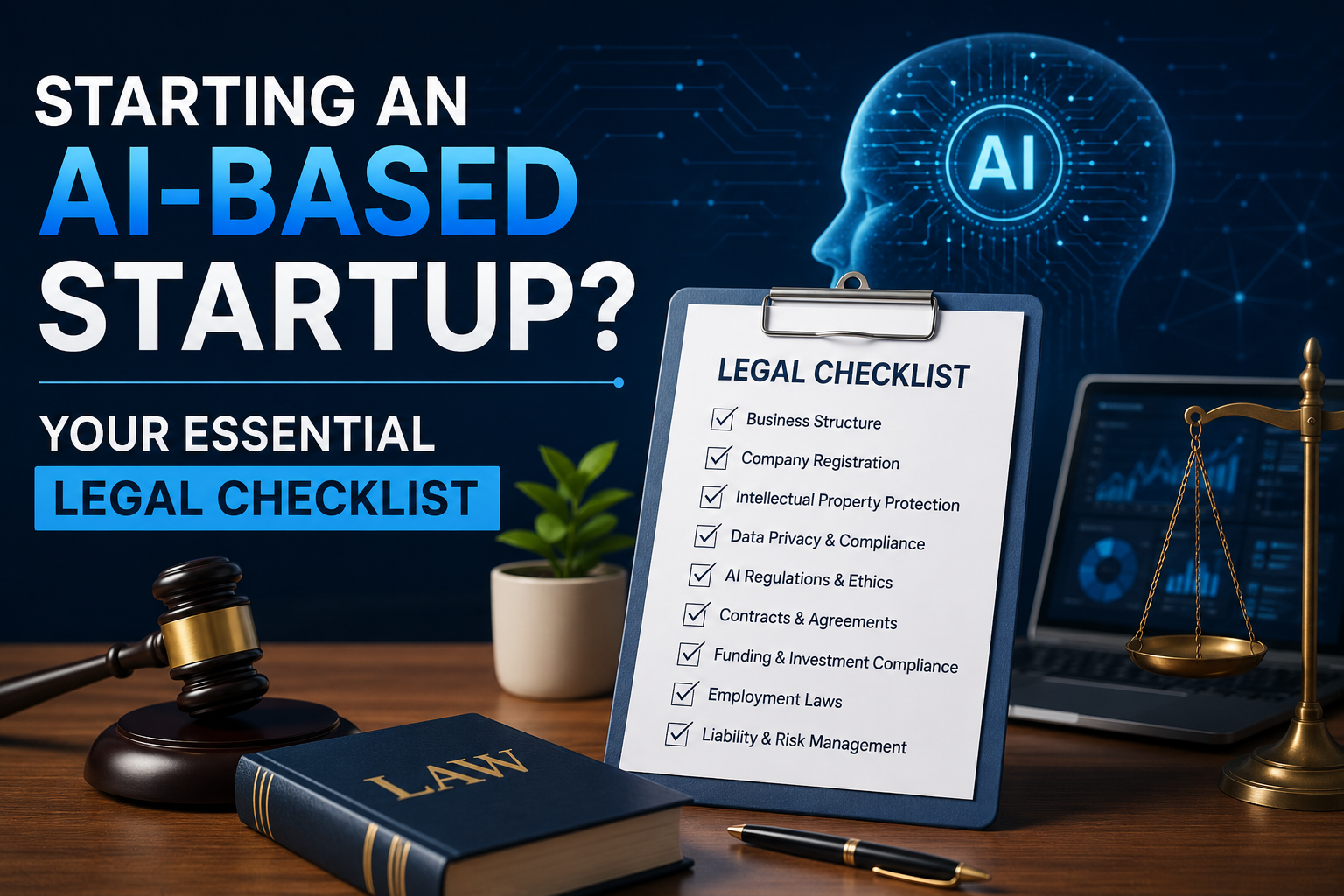

Starting an AI-based startup is exciting… you’re building something powerful, scalable, and fast-moving. But while your product evolves at machine speed, legal problems tend to appear suddenly and at exactly the wrong moment. AI startups also carry unique risks that involve data, automation, and IP, which means small mistakes can scale just as quickly as success.
Many founders push legal setup to “later,” only to face it during fundraising, customer deals, or platform reviews. This article is a practical, founder-friendly legal checklist to help you build the right foundations early–so you can move fast without creating risks that slow or derail your company later.
Choose the Right Business Structure
Your business structure is the legal container for everything you’re building. In an AI startup, where risk, data, and automation are present, the wrong structure can expose you personally to problems that should belong to the company.
That’s why many founders choose to form a Limited Liability Company (LLC). It helps separate personal and business liability, clarifies ownership, and creates a more credible foundation for customers, partners, and investors. Figuring out your structure can feel a bit like reading a guide to starting an LLC in Arizona. Why? Because the rules vary by state, the details matter, and skipping steps can create expensive problems later.
Beyond liability protection, structure affects who owns your code, your models, and your data–and how easy it will be to raise money or restructure later. Changing structure after growth begins is possible, but it’s almost always more painful and more expensive than getting it right early.
Get Your EIN and Set Up Financial Separation
Once your company exists as a legal entity, the next critical step is obtaining an Employer Identification Number (EIN). Think of it as your business’s Social Security number. You’ll need it to open bank accounts, pay employees or contractors, subscribe to most SaaS and cloud services, and eventually work with investors or enterprise customers.
Just as important is keeping your finances cleanly separated. Mixing personal and business money is one of the fastest ways to create legal, tax, and accounting headaches–and in some cases, it can even weaken the liability protection your company structure is supposed to give you.
AI startups in particular tend to rack up expenses quickly, from infrastructure to APIs to training costs. Having proper financial separation from day one makes your bookkeeping cleaner, your taxes simpler, and your company far more credible to partners, customers, and future investors.
Appoint a Registered Agent
A registered agent is responsible for receiving official legal documents on behalf of your company. This includes lawsuits, government notices, and compliance reminders, which are all things you definitely don’t want to overlook.
If these documents go unanswered, the consequences can include:
* Fines or penalties
* Loss of good standing with the state
* Default judgments in lawsuits
This role matters even more for AI startups, which often deal with data, IP, and regulatory issues. A reliable registered agent makes sure critical notices don’t get lost in email or misplaced internally.
Protect Your Intellectual Property
Your intellectual property is the core of your AI startup. That includes your code, models, training methods, data pipelines, and brand. If you don’t clearly own these assets, you don’t fully own your company.
Common IP risks include:
* Assuming you own work created by contractors or freelancers
* Missing IP assignment clauses in agreements
* Unclear ownership of models or training data
* Not protecting your brand name or product name
At a minimum, make sure all founders, employees, and contractors sign agreements that clearly assign IP to the company. You should also consider whether trademarks or copyrights make sense for your product, brand, or proprietary technology.
Handle Data Privacy and Compliance Early
AI startups almost always deal with user data, which means privacy and compliance can’t be an afterthought. Laws like GDPR and CCPA apply based on where your users live–not where your company is–and “we’re still small” is not a valid excuse.
You should have a basic privacy policy, clear data-handling practices, and an understanding of what third-party tools do with your data.
Understand Liability and Risk Exposure
AI systems can make mistakes–and when they do, someone is responsible. Whether it’s a bad recommendation, a flawed output, or misuse of your product, your company can still be on the hook.
Some risk areas include:
* Incorrect or misleading AI outputs
* Data misuse or privacy violations
* Customer reliance on automated decisions
* Misuse of your platform by third parties
This is why clear terms of service, disclaimers, and usage limits matter. They don’t eliminate risk, but they help define responsibility and reduce exposure..
Contracts Every AI Startup Needs
Handshake deals don’t scale, and they certainly don’t protect you. Clear contracts set expectations, protect your IP, and reduce the risk of disputes.
At a minimum, most AI startups need:
* Founder agreements
* Contractor or employee agreements with IP clauses
* Customer terms of service
As soon as you’re handling data, you may also need data processing or privacy-related agreements. Good contracts offer operational clarity.
Prepare for Growth and Investment
Investors evaluate your product in tandem with your legal and operational readiness. Sloppy structure, unclear IP ownership, or missing agreements can delay or kill a deal.
Most investors expect to see:
* Clean ownership and cap table
* Clear IP assignments
* Proper business structure, EIN, and registered agent
* Basic compliance in place
The cleaner your foundation, the easier it is to raise money, close partnerships, or scale without expensive legal cleanup.
Build the Legal Foundation… And Then Scale
AI makes it easier than ever to move fast; however, moving fast without the right legal foundation is one of the easiest ways to create problems that are hard to undo. Getting your structure right, protecting your IP, separating your finances, and handling compliance early protects your momentum.
The best AI startups don’t just build great technology. They build resilient companies that can grow, raise money, and scale without tripping over preventable legal issues. Put the foundation in place now. Your future self will thank you.




Post Comments