







Why Security Dispatch Systems Are Now Critical to Incident Prevention
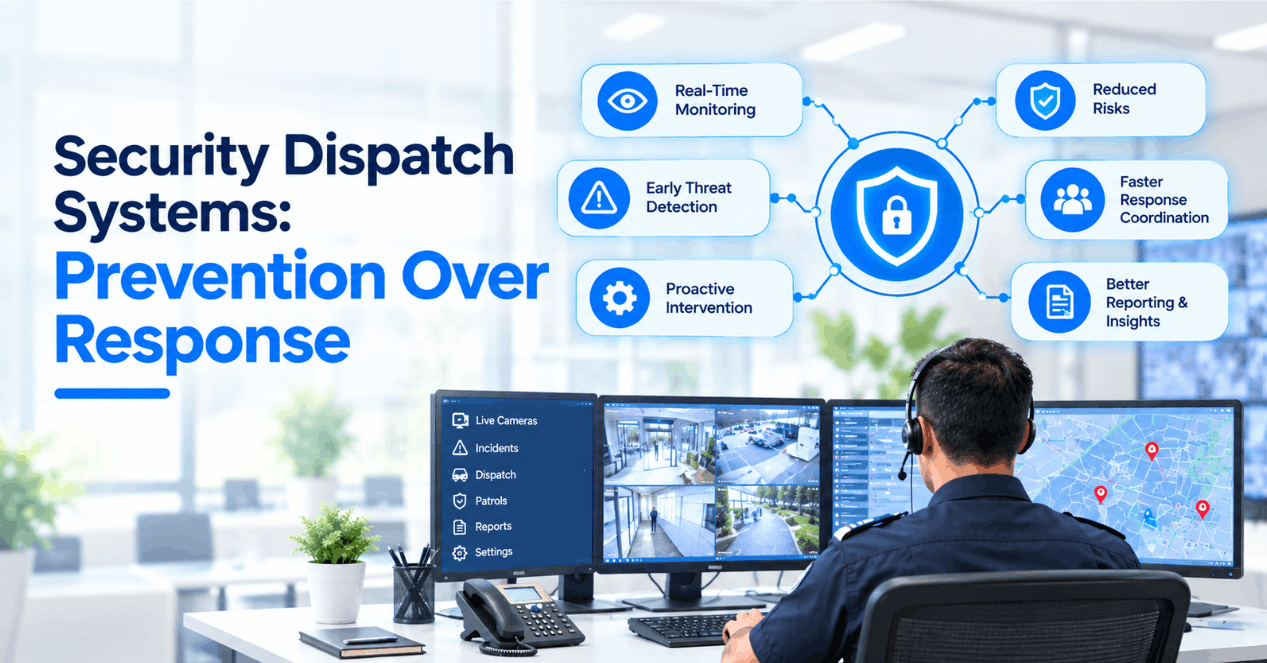
Most security operations managers spend their time managing responses to incidents that could have been prevented. The difference between a near-miss and a costly incident often comes down to one thing: whether your team had the right information at the right time. Modern dispatch systems do more than speed up response; they create the real-time visibility that stops problems before they escalate. When you implement security guard software that captures live dispatch data, tracks guard locations, and logs decisions as they happen, you shift from reactive incident management to proactive threat prevention. Custom software development powers the real-time location tracking, centralized logging, and dashboard visibility that make this kind of prevention possible.
Key Takeaways
* Real-time dispatch visibility allows managers to intervene before incidents escalate into crises.
* Centralized dispatch records create accountability and reduce the decision-making lag that often leads to security failures.
* Guard locations and response times tracked in live dispatch systems become powerful data for liability protection and operational improvement.
* Modern dispatch platforms connect physical security operations to the broader security picture, closing gaps that manual systems leave open.
Why It Matters
Security firms typically operate across multiple sites with guards spread across territories. Without dispatch visibility, supervisors rely on phone calls, radio chatter, and post-incident reports to understand what happened. By the time they get the full picture, the situation has already escalated. A guard finds an unsecured entry point but doesn't report it immediately. A potential intruder is spotted but response is delayed because no one knows where the nearest available guard is. A client asks for status and the manager has no real-time answer.
When incidents go undocumented or delayed, accountability becomes impossible. Clients lose trust. Liability grows. Worse, operational blind spots repeat themselves because there is no data trail to analyze and improve.
Dispatch systems solve this by making every movement, decision, and communication visible to management in real time. Supervisors can see exactly where guards are, which sites have coverage gaps, and which incidents need escalation. This is not about surveillance; it's about giving managers the operational data they need to make decisions that prevent crises.
How Dispatch Visibility Prevents Incidents Before They Happen
Incident prevention requires three things: awareness, speed, and accountability. Dispatch systems provide all three.
Situational Awareness in Real Time
When a guard reports suspicious activity, dispatch staff immediately knows the guard's location, which site they are protecting, and who else is nearby. A manager can see this data on a dashboard and decide in seconds whether the situation requires additional resources. Without this visibility, the guard waits for a callback or stands alone at a potential threat point. With it, backup can be routed before the situation deteriorates.
Real-time dispatch also shows which sites have been idle, which guards are available, and which areas have coverage gaps. This data lets managers assign resources proactively rather than reactively.
Decision-Making Without Delay
Manual dispatch systems introduce lag at every step. A guard calls in a report. Dispatch staff writes it down or types it up. A supervisor checks email or calls back. By the time a decision is made, the situation has changed. Real-time dispatch eliminates this friction. Managers see the incident instantly and can authorize a response immediately.
This speed is not just about faster reaction time; it's about preventing escalation. A fire alarm goes off. With instant dispatch visibility, a manager knows whether it's a false alarm based on recent guard tour data. An alarm is triggered at a client site. A manager can see whether it coincides with a scheduled maintenance activity, preventing a false response that wastes resources.
Accountability That Improves Operations
When every dispatch decision and guard response is logged in a centralized system, accountability becomes automatic. Managers can review what happened, when decisions were made, and who had the information at the time. This is critical for liability protection, but it also creates a feedback loop for improvement.
If an incident escalated when it could have been prevented, the record shows exactly where the decision-making process failed. Was there a communication gap? A delayed response? A routing error? The data makes the problem visible so you can fix it. Over time, these improvements compound, reducing the frequency and severity of incidents across your entire operation.
A Real Scenario: How Dispatch Visibility Prevented a Security Failure
A medium-sized security firm with three corporate office locations in a city relied on phone-based dispatch for years. One evening, an alarm triggered at the downtown location around 7 PM. The dispatch manager called the nearest guard, who was actually at another site five minutes away. The guard traveled to the downtown location, arriving 12 minutes after the alarm. By then, an unauthorized person had accessed the building's back entrance, triggered a secondary alarm, and left.
The incident was contained, but the client was upset. The guard had arrived late. The response felt slow. The manager had no data to show what went wrong.
After implementing a modern dispatch system, the same firm faced a similar situation six months later. An alarm triggered at the same downtown location. This time, the dispatch dashboard showed the guard at the adjacent site was actually 2 minutes away via the building's loading dock access route. A second guard at the main office location (7 minutes away) was also visible. The dispatch manager routed the closer guard with complete certainty of location and ETA, and also alerted the second guard as backup. The first guard arrived in under 3 minutes. No unauthorized access occurred. The client saw the fast response in real time via a client portal. The incident was prevented before it started.
The difference was not heroic action; it was operational visibility. Real-time dispatch data made the right decision obvious and fast.
What Dispatch Systems Reveal About Your Operations
Beyond incident prevention, dispatch data reveals patterns that improve long-term security posture.
Coverage Analysis
When dispatch logs show response times, guard availability, and location history across weeks and months, you can see which sites have genuine coverage gaps and which times of day are vulnerable. This lets you adjust staffing, routes, or response protocols based on actual patterns rather than guesses.
Decision-Making Patterns
Do certain supervisors consistently authorize faster responses? Are there specific types of incidents where response time slows? Do particular sites generate more false alarms? Dispatch data reveals these patterns. If false alarms spike at one location, it might indicate a faulty sensor or a need for clearer access procedures. If response time is slower at certain hours, it might reveal a scheduling problem or a training gap.
Client Satisfaction and Trust
Clients care about response time and proof that their site is being actively monitored. A dispatch system with a client portal lets clients see real-time guard locations, response confirmations, and incident logs. This transparency builds trust and often prevents disputes about whether a site was actually protected.
Actionable Takeaways
1. Audit your current dispatch method. If you are still relying on phone calls, radio chatter, or email for dispatch coordination, you are operating with a structural blind spot. Map out where delays occur and how often you lack real-time information.
2. Prioritize live location visibility. A good dispatch system must show guard locations in real time. Without this, managers are still making decisions with incomplete information.
3. Require incident logging at dispatch time, not after. Reports should be entered the moment dispatch is notified, not hours later when the shift ends. This is the difference between prevention and documentation.
4. Set response time standards and track them. Once you have dispatch data, set clear expectations for how fast responses should happen. Track compliance and use the data to improve routing and staffing.
5. Review dispatch logs weekly. Spend 30 minutes every week reviewing what happened, which decisions were made, and which incidents could have been prevented with different data or faster decisions. Use these insights to retrain staff and refine protocols.
Conclusion
Security firms often talk about response time as if it is the only measure of good dispatch. But response time only matters if you are already reacting to an incident. Incident prevention requires visibility, speed, and accountability working together. Modern dispatch systems give you all three by making guard locations, decisions, and incident timelines visible in real time. The result is not just faster responses; it is fewer incidents that need responding to in the first place. That is the shift from good security operations to exceptional ones.
FAQ
What is the difference between dispatch visibility and traditional radio dispatch?
Traditional radio dispatch happens in the moment but leaves no digital trail. A guard calls in, dispatch responds verbally, and if anyone is not listening, the information is lost. Visibility-enabled dispatch logs every communication, location, and decision in a centralized system so managers can review it, audit it, and learn from it. This creates accountability and enables better decision-making over time.
How does real-time guard location help prevent incidents?
When a manager knows exactly where each guard is, they can route the closest guard to an incident instead of guessing. They can also see coverage gaps and prevent resource gaps that create vulnerability. Real-time location also lets managers ensure guards are actually following assigned patrol routes and spending time at the right locations.
Can dispatch visibility replace incident prevention training?
No. Dispatch visibility is a tool that supports trained staff, not a replacement for training. A well-trained guard with poor dispatch information will still make slow decisions. A poorly trained guard with perfect dispatch information may miss subtle threat indicators. Both visibility and training are necessary.
How long does it take to see benefits from a dispatch system?
Some benefits appear immediately: faster response times, clearer communication, and fewer dropped messages. Larger benefits like reduced incident frequency and better staffing decisions take 3 to 6 months to accumulate because they require analyzing patterns across time. Start measuring response time and incident type on day one so you can track improvement.
What should dispatch staff training look like for a new system?
Dispatch staff need to understand not just how to use the system, but how to use it strategically. This means teaching them to interpret location data, make routing decisions based on real-time information, and log incidents with enough detail for later analysis. Include scenario training so staff can practice high-pressure decisions in a low-risk environment.
Does dispatch visibility require expensive hardware or complex IT infrastructure?
Modern dispatch systems are cloud-based and work on standard smartphones and tablets that security staff likely already have. There is no need for specialized hardware. Setup typically takes days to weeks depending on the size of your operation, not months.