







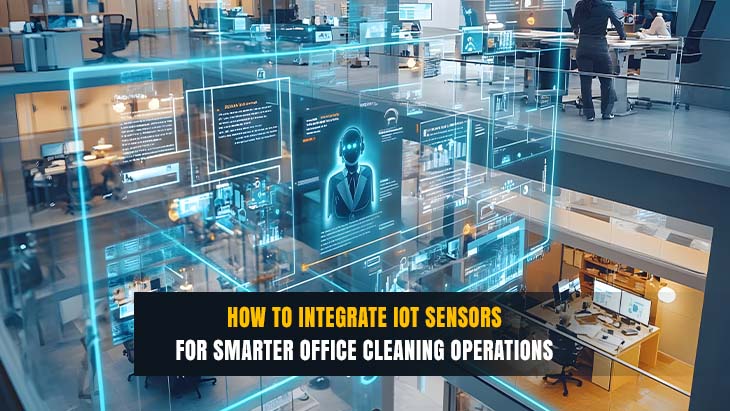

The IoT technology is revolutionizing the building maintenance and commercial cleaning by rendering the processes responsive and data based. Smart sensors are also coming to the rescue of property managers and other service providers in the modern facilities who want to monitor occupancy, waste levels and enhance efficiency in the workflow. Commercial cleaning teams such as those that provide commercial cleaning Seattle properties are integrating connected devices to save on the wasted man hours and ensure high levels of hygiene. With these systems, cleaning personnel are free to move away with routine schedules to need based service models. The transition leads to increased productivity besides managing to keep office environments healthy both to employees and visitors.
Planning Sensor Deployment
Facilities teams need to consider high-traffic areas where data collection would be of best use before installation of the devices. The priority locations are often entryways, meeting rooms, restrooms, and shared kitchen spaces since they have the highest rate of accumulation in terms of use related wear. Mapping of such zones is important because sensors will produce meaningful insights, instead of gathering unnecessary information. Effective commercial cleaning business is initiated by the knowledge of the movement of people within the space and not mere installation of technology anywhere.
Designing an IoT strategy is also important in budget planning. Depending on their functionality, battery life and compatibility with the existing building management systems, sensors differ in terms of price. The property managers should collaborate with the commercial cleaning Seattle providers to identify the most important data points to their workflow. The costs associated with maintenance are minimized by investing in sound hardware at the onset thus avoiding the downtime of the system which can interfere with the cleaning schedule.
Monitoring Occupancy and Usage Patterns
The utmost useful tools in the maintenance of modern offices include occupancy sensors. These devices can pick any movement and give the real time information on the number of people using a certain room. This information can be used by cleaning teams to allocate high use areas when there is peak business. As an illustration, when a conference room is commonly used, cleaning personnel can arrange regular cleaning after each meeting instead of having to do it in accordance with strict time schedules.
The use of occupancy data also assists in minimizing the needless cleaning tasks. The offices, which adhere to the usual cleaning routine, are likely to waste the time cleaning areas that do not see much use. Through smart sensor information, commercial cleaning companies can better distribute staff resources. Commercial cleaning organizations that target Seattle service areas usually discover that data-driven scheduling enhances the customer satisfaction and cost management.
Managing Waste and Hygiene Conditions
Modern offices are becoming the places that have smart waste bin sensors. These machines check the fill volume and give notifications when bins are in need of repairs. The cleaning staff will not have to adhere to the same schedules of collection but can only react when the bins are about to fill. This minimizes the wastage of labor and aids in keeping work areas cleaner most of the day.
Healthier office environments are also assisted by air quality and humidity sensors. These systems monitor the conditions indoors, and assist maintenance workers to react promptly in case there is a problem with ventilation. The quality of the air may influence the comfort and productivity of employees, thus the incorporation of environmental monitoring in the commercial cleaning operations is a value addition in the long run. In the facilities which invest in smart hygiene monitoring, there is usually a decrease in the number of complaints regarding the existence of odors and dust development.
Optimizing Workforce Scheduling and Efficiency
IoT sensors are helpful in workforce planning. Supervisors in charge of cleaning can also access data in terms of usage and can allocate staff according to actual building activity as opposed to set shift schedules. This practice enhances performance in the workplace and saves on the needless overtime expenses. The analytics dashboard is frequently employed by service providers that assist commercial cleaning Seattle businesses to monitor the cleaning performance and implement changes to the staffing levels.
The alerts are also real time and enhance quick response in case of the unexpected. In the case of a restroom with a lot of people during a major office gathering, the supervisors can also send cleaners on the spot. This enhances the quality of service and helps to avoid the increase of hygiene problems. The use of technology in cleaning activities enables the teams to shift to proactive maintenance of the facilities as opposed to reactive.
Security, Maintenance, and Future Growth
Security is a factor when implementing interconnected devices. It is necessary that facilities teams implement a data protection system to secure data collected by the sensor by the use of secure network protocols and periodic software update. Effective security measures will guard against jurisdictional access and make building information confidential and dependable to the security operations of commercial cleaning.
The advancement of IoT technology in the future will keep enhancing the cleaning of offices. Cleaning needs can be anticipated by artificial intelligence systems in the future. Given that smart infrastructure is being invested in today, companies will be in a better position to adapt to changes in the workplace in the future. Business cleaning organizations that embrace such technologies early in the years receive competitive advantages because they provide smarter, more efficient services to customers.



Post Comments