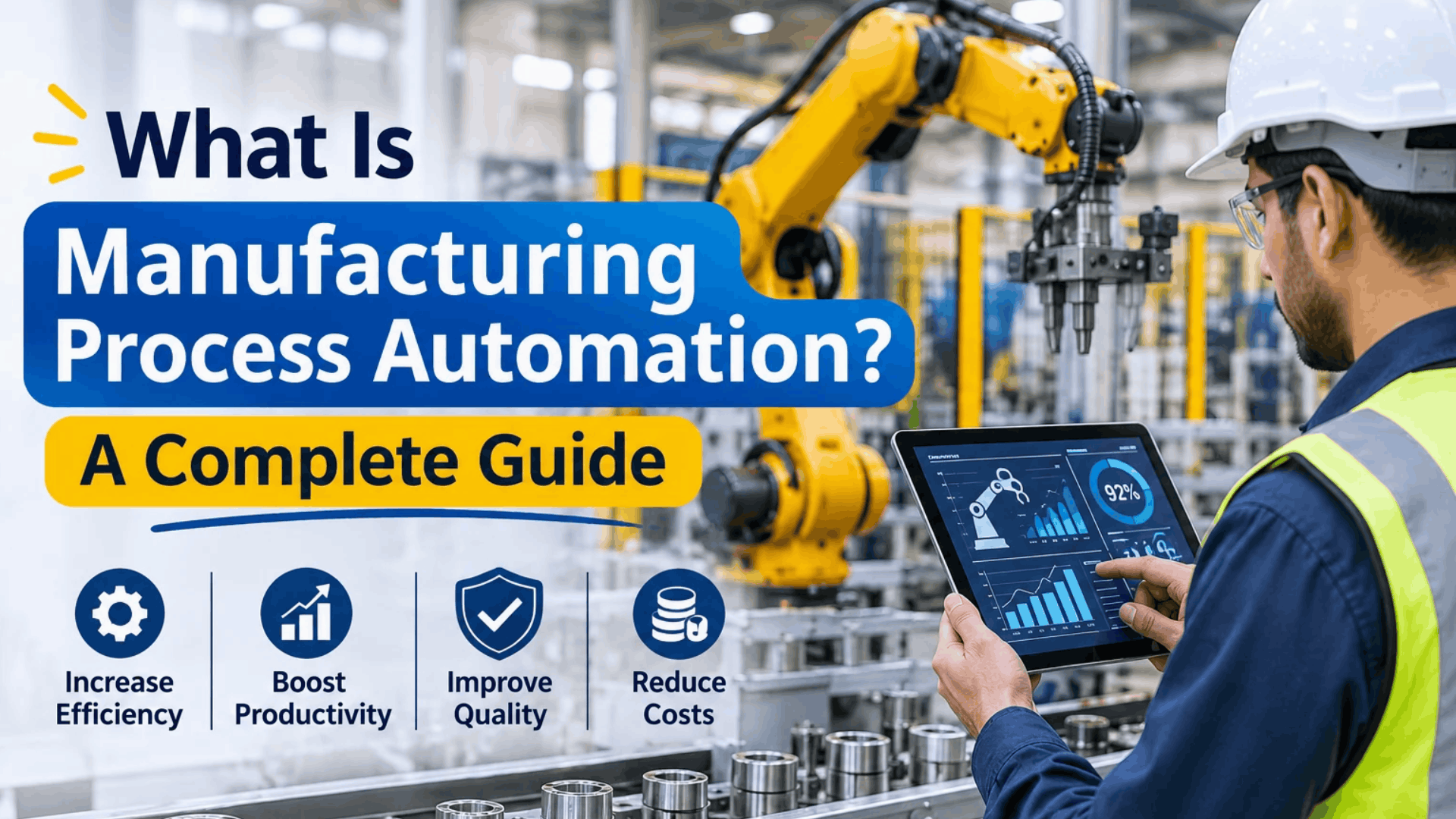

Manufacturing process automation is the use of technology such as sensors, PLCs, robots, software and AI to run production tasks with little or no manual effort. It connects machines, data and business systems so a factory can produce goods faster, with fewer errors, consistent quality and lower operating costs.
For manufacturers in India and around the world, automation is no longer optional. Rising labour costs, tighter quality standards and demand for faster delivery are pushing factories to replace manual, paper-based work with connected, data-driven processes. In this guide, Techasoft explains how manufacturing process automation works, the main types, its benefits, real use cases and how to get started.
How Does Manufacturing Process Automation Work?
Manufacturing process automation works by collecting data from machines, using control systems to act on that data, and connecting the shop floor to business software. Most automated factories follow a layered structure:
- Field level (sensors and actuators): sensors measure temperature, pressure, speed, weight or vision data, and actuators such as motors and valves carry out actions.
- Control level (PLC and DCS): Programmable Logic Controllers and Distributed Control Systems run the logic that tells machines what to do and when.
- Supervisory level (SCADA and HMI): SCADA systems and operator screens give real-time visibility, alarms and remote control across lines and plants.
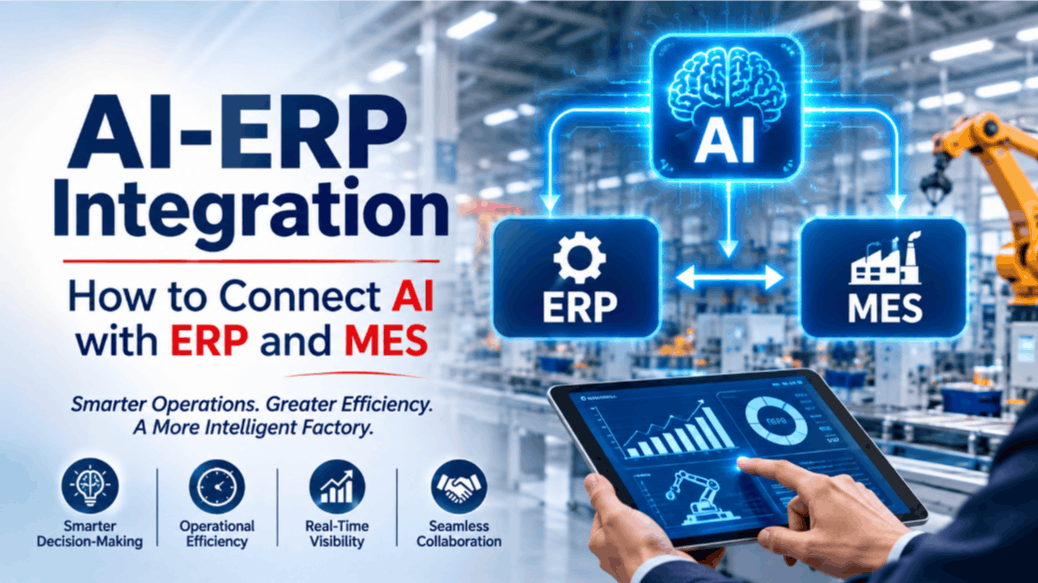
- Operations level (MES): a Manufacturing Execution System tracks work orders, production output, quality checks and traceability.
- Enterprise level (ERP): ERP systems such as SAP, Oracle or Tally handle planning, inventory, procurement and finance.
- Intelligence layer (AI, ML and IIoT): machine learning models and industrial IoT platforms analyse data across all levels to predict failures, optimise output and automate decisions.
When these layers share data in real time, the factory moves from isolated machine automation to end-to-end process automation.
Types of Automation in Manufacturing
There are four main types of manufacturing automation, chosen by production volume and product variety.
| Type | Best for | Example |
|---|---|---|
| Fixed (hard) automation | High volume, single product | Bottling lines, automotive part stamping |
| Programmable automation | Batch production with periodic changeovers | CNC machining, pharmaceutical batches |
| Flexible automation | Many product variants with minimal changeover time | Robotic welding cells, FMS lines |
| Integrated (intelligent) automation | End-to-end, data-driven operations | Smart factories using MES, ERP, AI and IIoT together |
Most modern plants use a mix. The fastest-growing category in 2026 is integrated automation, where AI connects shop floor data with business decisions.
Key Benefits of Manufacturing Process Automation
The main benefits of manufacturing process automation are higher productivity, consistent quality, lower costs and better visibility.
- Higher productivity: automated lines can run 24/7 with shorter cycle times and fewer stoppages.
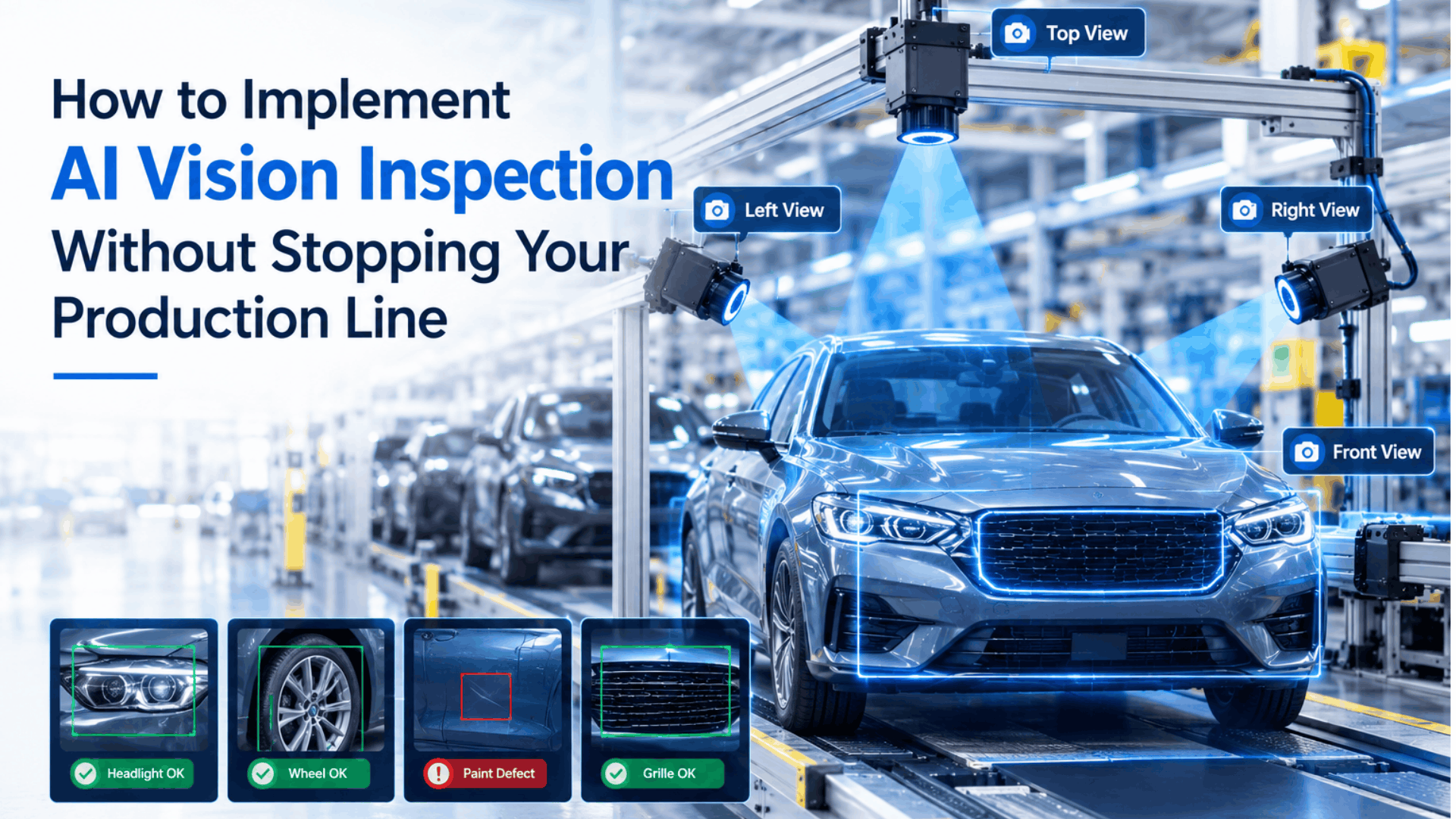
- Consistent quality: machines and AI vision systems repeat tasks precisely and catch defects in real time.
- Lower operating costs: less rework, scrap, energy waste and manual data entry.
- Improved worker safety: robots take over hazardous, repetitive or heavy tasks.
- Real-time visibility: managers see output, downtime and OEE (Overall Equipment Effectiveness) on live dashboards.
- Traceability and compliance: every batch, part and process step is recorded, which helps with ISO, FDA and customer audits.
- Scalability: new lines, products or plants can be added without proportional increases in headcount.
Examples of Process Automation in Manufacturing
Common examples include predictive maintenance, AI quality inspection, automated material handling and production scheduling.
- Predictive maintenance: sensors and ML models detect vibration or temperature changes and flag a machine before it fails.
- AI visual inspection: cameras with computer vision check every product for surface defects, missing parts or wrong labels.
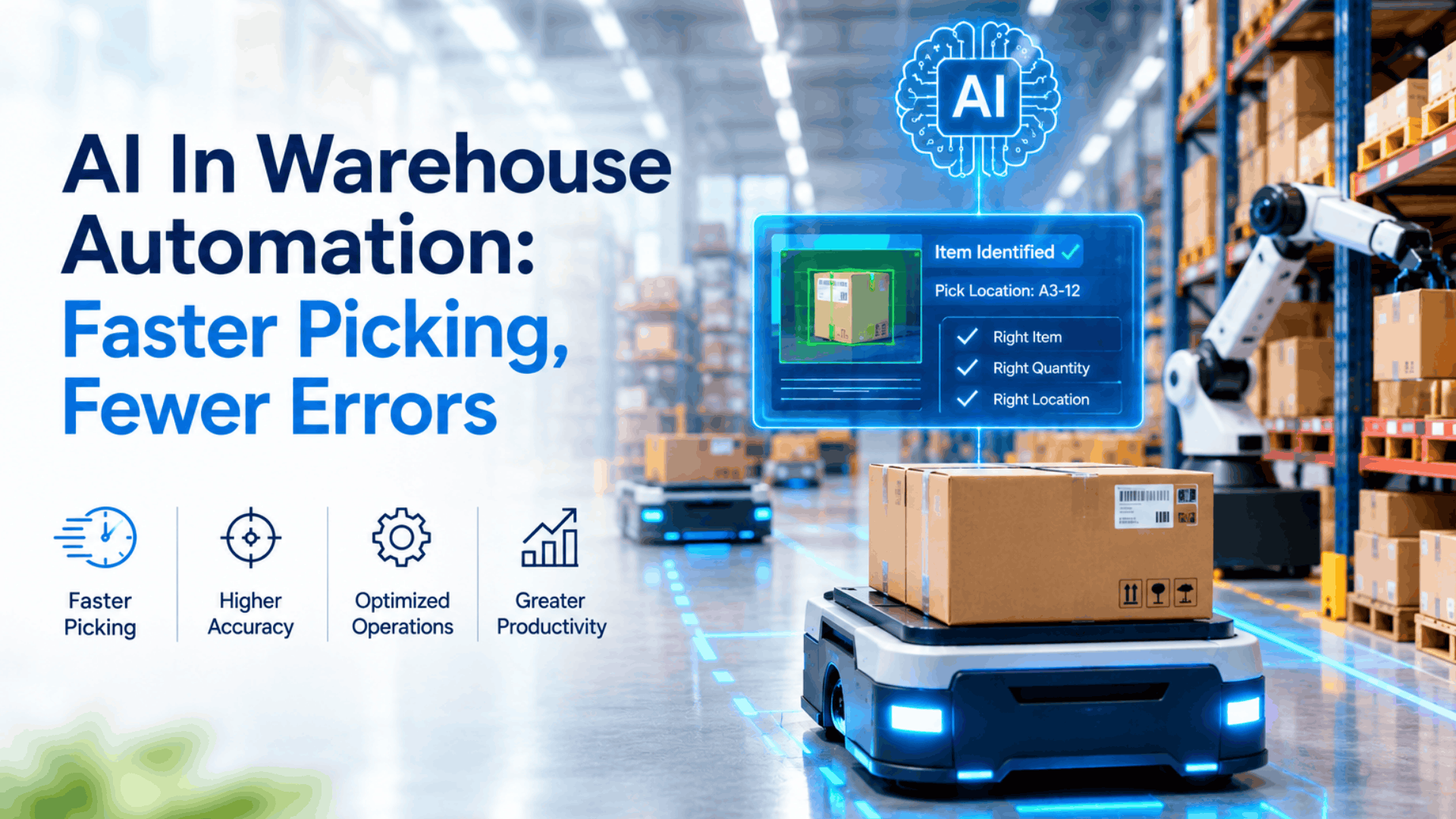
- Automated material handling: AGVs, AMRs and conveyors move raw materials and finished goods without forklifts.
- Production planning and scheduling: software creates optimal schedules based on orders, machine capacity and inventory.
- Inventory and procurement automation: stock levels trigger purchase orders automatically in the ERP.
- Energy monitoring: smart meters and analytics cut power use during idle time.
- Document automation: AI reads invoices, delivery challans, GRNs and quality certificates and enters data into ERP.
How to Implement Manufacturing Process Automation in 5 Steps
The safest way to automate is to start with one high-impact process, prove ROI, then scale.
- Map and measure current processes: use process mining or a shop floor audit to find bottlenecks, manual steps and downtime causes.
- Prioritise use cases by ROI: pick processes with high volume, frequent errors or safety risks.
- Choose the right technology stack: select PLCs, SCADA, MES, IIoT sensors and AI tools that integrate with your existing ERP.
- Run a pilot: automate one line or process, track KPIs such as OEE, scrap rate and cycle time, and refine.
- Scale and integrate: roll out across lines and plants, connect all data to a central platform and train your team.
The Role of AI and Agentic AI in Manufacturing Automation
AI is turning manufacturing automation from rule-based execution into systems that learn, predict and decide. Traditional automation follows fixed instructions. AI-driven automation adapts to changing conditions.
In 2026, the biggest shift is agentic AI: AI agents that can plan and complete multi-step goals, such as detecting a quality issue, finding the root cause, adjusting machine settings and updating the ERP, with human approval where needed. Other key trends include:
- Hyperautomation: combining RPA, AI, process mining and low-code tools to automate entire workflows.
- Digital twins: virtual replicas of machines or lines used to test changes before applying them on the floor.
- Self-healing operations: systems that detect and recover from faults automatically.
- Hybrid automation: reliable rule-based workflows combined with AI for decisions, which most manufacturers prefer for safety and governance.
Why Choose Techasoft for Manufacturing Process Automation?
Techasoft helps manufacturers move from manual operations to intelligent, connected factories. Our team combines AI/ML development, industrial automation and enterprise software integration to deliver solutions that fit your plant, not a generic template.
- Custom AI and machine learning models for predictive maintenance, quality inspection and demand forecasting
- IIoT integration with PLC, SCADA, MES and ERP systems
- Process automation and AI agent development for production, procurement and operations
- Pilot-first approach with measurable ROI before scale-up
Ready to automate your manufacturing processes? Talk to Techasoft's automation experts for a free process assessment.
Frequently Asked Questions
What is meant by process automation in manufacturing?
Process automation in manufacturing means using control systems, software, robots and AI to perform production tasks automatically, reducing manual work and improving speed, quality and consistency.
What are the 4 types of automation in manufacturing?
The four types are fixed automation, programmable automation, flexible automation and integrated automation.
What is the difference between industrial automation and process automation?
Industrial automation focuses on controlling machines and equipment. Process automation covers the full workflow, including machines, data, quality, inventory and business systems.
How does AI improve manufacturing automation?
AI analyses production data to predict machine failures, detect defects, optimise schedules and make decisions automatically, making automation adaptive instead of fixed.
Is manufacturing process automation suitable for small and mid-sized factories?
Yes. SMEs can start with affordable steps such as IIoT sensors, cloud dashboards or automating one process, then scale as ROI is proven.
How long does it take to implement process automation in a factory?
A focused pilot usually takes 6 to 12 weeks. Plant-wide integration can take several months depending on systems and scope.