







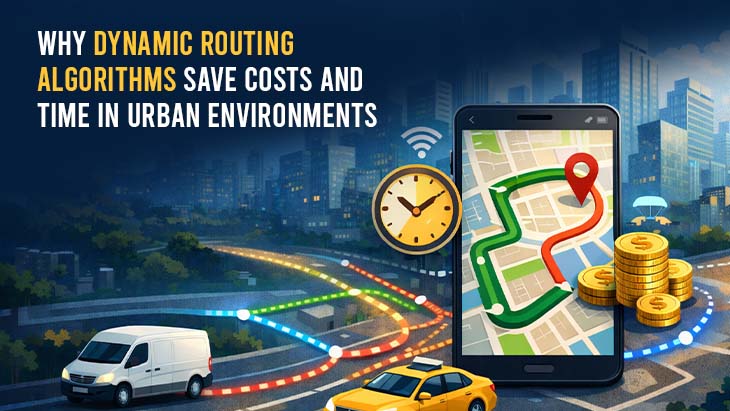

Urban transport is very challenging to the companies that use effective transportation systems. Planning the routes in cities is a difficult task due to congestion, unpredictable traffic zones, and a high concentration of destinations. Companies that do not optimize the delivery routes will have wasted fuel expenditures, wasted time, and unsatisfied customers. Dynamic routing algorithms have then become a potent answer to this and as such businesses are now able to adjust routes dynamically to take advantage of city opportunities and optimize their efficiency.
Dynamic routing algorithms use recent information to change the delivery routes depending on the present traffic conditions, road closures, and other factors. Such systems are dynamic, in contrast to the use of a pre-established route as in the case of static routing, where the conditions keep on being analyzed and vehicles rerouted accordingly. This flexibility is more crucial to the last mile delivery where efficient and prompt navigation through densely populated cities directly affects the quality of services and the cost of operations.
Improved Operational Efficiency
Dynamic routing algorithms assist companies to optimize the fleet utilization, minimize the idle time, and avoidable mileage. These systems also have the advantage of keeping the drivers on the quickest and most efficient routes by constantly reviewing the traffic flow and delivery priorities. This results in a short delivery time, less fuel use, and less wear and tear of the vehicle, all of which will result in a major saving in the long run.
When dealing with companies that depend on third-party providers, this coordination makes operations easier by integrating dynamic routing with 3PL logistics services. Live-time delivery enables the dispatchers to allocate the deliveries to be made by considering the up-to-date position and route efficiency to avoid redundancy or repeat journey. This will not only enhance the speed of delivery but also enhance effectiveness of service to the final customer which is a major aspect in achieving competitive advantage in urban markets.
Enhanced Last Mile Delivery Experience
Last mile delivery is the last part of the delivery process, which tends to be the determining factor of customer satisfaction. This is a critical step that is enhanced by dynamic routing algorithms which reduce delays, minimize the number of missed deliveries and they make sure that the drivers reach the right destinations effectively. Such a degree of reliability improves the general experience of the recipients which is important to businesses that function in use of competitive urban markets.
With real time routing updates, businesses can take the initiative to communicate estimated delivery times, react to changes in delivery instructions and plan optimal delivery sequences. It also saves the complaints of customers and enhances their loyalty to the brand, which proves that a well-developed use of technology in logistics can lead to not only efficiency in the work but also a favorable attitude of the customers.
Adaptation to Traffic Conditions
The traffic of cities is infamously erratic, and the traffic jams change all the day because of accidents, meetings, or the morning rush. Dynamic routing algorithms will be able to react to such changes immediately and reroute vehicles to prevent delays. This responsiveness reduces effects of traffic delays to delivery schedules so that the packages are delivered promptly.
With constant monitoring of the situation on the roads and the reevaluation of the best routes, the business companies will be able to control the workload of drivers and decrease the amount of stress caused by having to drive through the busy streets. This flexibility is not only beneficial in efficiency, but also in safety, since the drivers are directed through the routes that will not require them to navigate in high risk zones or in hazardous driving conditions.
Cost Reduction in Delivery Operations
The real-time route optimization applies directly to financial business savings. Less miles of transportation and a shorter period of idle time imply lower fuel costs, a decline in vehicle maintenance costs, and more rational distribution of labor costs. Such savings come especially in effect with the companies that can process a great number of deliveries within urban locations because operational costs may skyrocket without adequate route management.
Dynamic routing as well minimizes the chances of missed deliveries and late shipments, which have latent costs in the form of customer dissatisfaction, penalties or product returns. Ensuring deliveries on time, businesses will consolidate the loyalty of the customers and could prevent spending on the repeat trip or correction measures. This renders dynamic routing a strategic investment to companies that have intentions in controlling costs without compromising with high standards of services.
Integration with Modern Logistics Systems
The use of dynamic routing in modern logistics systems is growing in large cities to facilitate elaborate operations. Such systems may be combined with GPS tracking systems, traffic monitoring systems, and warehouse management systems to give a holistic picture of the delivery process. The integration enables businesses to have more accurate route plans, track progress, and adapt strategies based on changes in conditions.
In the case of businesses that employ 3PL logistics services, the dynamic routing combined with advanced technology platforms will provide a smooth coordination of multiple carriers and point of delivery. The integration allows more accurate planning, effective management of resources and enhances accountability throughout the supply chain. The effect of this is faster deliveries, reduced costs, and a more resilient logistics operation to the businesses.
Conclusion
Dynamic routing algorithms are a necessary technology in the business world that manages to cope with the complexity of urban deliveries. Real-time route optimization helps companies to cut costs, save time and be more reliable in services. Combining the algorithms with the latest logistics systems and 3PL logistics providers will improve the efficiency of the operations and increase the coordination throughout the supply chain. Specifically, the last mile delivery optimization with the help of dynamic routing guarantees that the deliveries become timely and precise in the end, which will enhance the customer satisfaction and make the business thrive in the long term.
The introduction of the dynamic routing technology is not only a tactical advancement in the delivery process, but a strategic solution to the logistics management of the city in a cost efficient and time saving way.


Post Comments